Jumat, 13 Maret 2020

How Italy, South Korea differ in tackling coronavirus outbreak - Al Jazeera English

In Italy, millions are locked down and more than 1,000 people have died from the coronavirus.

But in South Korea, which was hit by the disease at about the same time, only a few thousand are quarantined and 67 people died.

More:

The story of the two outbreaks illustrates a difference in approach. 

Italy started out testing widely, then narrowed the focus so that now, authorities do not have to process hundreds of thousands of tests. But there's a trade-off: They can't see what's coming and are trying to curb the movements of the country's entire population of 60 million people to contain the disease.

Coronavirus: Too late to stop? | UpFront (24:55)

In South Korea, authorities are testing hundreds of thousands of people for infections and tracking potential carriers like detectives, using mobile phone and satellite technology.

Both countries saw their first cases of the disease called COVID-19 in late January.

South Korea has since reported nearly 8,000 confirmed cases, after testing more than 222,000 people.

In contrast, Italy has more than 12,000 confirmed cases after carrying out more than 73,000 tests on an unspecified number of people.

Epidemiologists say it is not possible to compare the numbers directly. But some say the different outcomes point to an important insight: Aggressive and sustained testing is a powerful tool for fighting the virus.

Jeremy Konyndyk, a senior policy fellow at the Center for Global Development in Washington, said extensive testing can give countries a better picture of the extent of an outbreak. When testing in a country is limited, he said, the authorities have to take bolder actions to limit the movement of people.

"I'm uncomfortable with enforced lockdown-type movement restrictions," said Konyndyk. "China did that, but China is able to do that. China has a population that will comply with that."

Previous lessons

Italy and South Korea are more than 5,000 miles (8,000 km) apart, but there are several similarities when it comes to coronavirus.

Both countries' main outbreaks were initially clustered in smaller cities or towns, rather than in a major metropolis - which meant the disease quickly threatened local health services.

Both confirmed their first cases after doctors decided to ignore testing guidelines.

South Korea, which has a slightly smaller population than Italy at about 50 million people, has around 29,000 people in self-quarantine. It has imposed lockdowns on some facilities and at least one apartment complex hit hardest by outbreaks. But so far no entire regions have been cut off.

Seoul says it is building on lessons learned from an outbreak of Middle East respiratory syndrome (MERS) in 2015 and working to make as much information available as possible to the public.

South Korea is also enforcing a law that grants the government wide authority to access data: CCTV footage, GPS tracking data from phones and cars, credit card transactions, immigration entry information, and other personal details of people confirmed to have an infectious disease.

The authorities can then make some of this public, so anyone who may have been exposed can get themselves - or their friends and family members - tested.

Coronavirus: What is a pandemic and how will things change? (02:14)

In addition to helping work out who to test, South Korea's data-driven systems help hospitals manage their pipeline of cases.

People found positive are placed in self-quarantine and monitored remotely through an app or checked regularly in telephone calls until a hospital bed becomes available. When this occurs, an ambulance picks the person up and takes them to a hospital with air-sealed isolation rooms. 

This approach comes at the cost of some privacy. South Korea's system is an intrusive mandatory measure that depends on people surrendering what, for many in Europe and the US, would be a fundamental right of privacy.

"Traditional responses such as locking down affected areas and isolating patients can be only modestly effective, and may cause problems in open societies, says South Korea's Deputy Minister for Health and Welfare Kim Gang-lip.

In South Korea's experience, he told reporters on Monday, lockdowns mean people participate less in tracing contacts they may have had. "Such an approach," he said, "is close-minded, coercive and inflexible."

Let's block ads! (Why?)


https://news.google.com/__i/rss/rd/articles/CBMicmh0dHBzOi8vd3d3LmFsamF6ZWVyYS5jb20vbmV3cy8yMDIwLzAzL2l0YWx5LXNvdXRoLWtvcmVhLWRpZmZlci10YWNrbGluZy1jb3JvbmF2aXJ1cy1vdXRicmVhay0yMDAzMTMwNjI1MDU3ODEuaHRtbNIBdmh0dHBzOi8vd3d3LmFsamF6ZWVyYS5jb20vYW1wL25ld3MvMjAyMC8wMy9pdGFseS1zb3V0aC1rb3JlYS1kaWZmZXItdGFja2xpbmctY29yb25hdmlydXMtb3V0YnJlYWstMjAwMzEzMDYyNTA1NzgxLmh0bWw?oc=5

2020-03-13 09:14:30Z
CAIiENJqcjRHdxap9QpJrQ-E4OYqFAgEKgwIACoFCAowhgIwkDgw0O8B

South Korea reports more recoveries than coronavirus cases for the first time - Reuters

SEOUL (Reuters) - South Korea reported more recoveries from the coronavirus than new infections on Friday for the first time since its outbreak emerged in January, as a downward trend in daily cases raised hopes that Asia’s biggest epidemic outside China may be slowing.

FILE PHOTO: Quarantine workers in protective gear spray disinfectants at a screening facility for checking coronavirus disease (COVID-19) in Cheongdo county, which has been designated as a 'special care zone' since the coronavirus outbreak, near Daegu in North Gyeongsang Province, South Korea, March 11, 2020. REUTERS/Kim Kyung-Hoon

The Korea Centers for Disease Control and Prevention (KCDC) recorded 110 new coronavirus cases on Friday compared with 114 a day earlier, taking the national tally to 7,979. The death toll rose by three to 70.

In contrast, 177 patients were released from hospitals where they had been isolated for treatment, the KCDC said.

This marks the first time that the daily number of recovered people exceeded that of new infections since South Korea’s first patient was confirmed on Jan. 20.

The latest figures are in line with a downward trend in new cases which has raised hopes that the outbreak may be easing in Asia’s fourth-largest economy.

The trend is expected to persist, with more self-quarantined patients being discharged in the coming days, KCDC chief Jeong Eun-kyeong said.

But officials urged vigilance after new clusters of infections emerged at a call center in a crowded part of capital Seoul, and the fisheries ministry based in the administrative city of Sejong.

“We’ve managed to turn the corner, but there are concerns about overseas inflows, as well as possible infections at home around such facilities as call centres, computer cafes and karaoke rooms,” Prime Minister Chung Sye-kyun said at a meeting in Daegu.

Of the latest 110 cases, 61 were from the hard-hit southeastern city of Daegu where a fringe Christian church at the center of the epidemic is located, while 17 and 13 were in Sejong and Seoul, respectively.

At least 109 cases so far have been linked to the call center, operated by an insurance company whose 800-strong workforce is being tested or in quarantine for monitoring. But the rate of increase in new infections has been slowing over the past couple of days.

Seoul city said it plans to carry out extensive checks on some 10,500 computer cafes and karaoke bars as part of efforts to prevent the spread of the virus in crowded workplaces.

“We assess that we’ve put out a big fire, but cannot lower our guard yet”, Mayor Park Won-soon told a briefing.

Global alarm over the coronavirus intensified, with governments from Europe to the United States unveiling new measures aimed at slowing the spread of a disease that has infected almost 135,000 people worldwide.

South Korea said it will subject visitors from France, Germany, Britain, Spain and the Netherlands to reinforced border checks starting Sunday, after imposing similar rules for China, Italy and Iran suffering a major outbreak.

Reporting by Hyonhee Shin; Editing by Stephen Coates and Lincoln Feast.

Let's block ads! (Why?)


https://news.google.com/__i/rss/rd/articles/CBMijAFodHRwczovL3d3dy5yZXV0ZXJzLmNvbS9hcnRpY2xlL3VzLWhlYWx0aC1jb3JvbmF2aXJ1cy1zb3V0aGtvcmVhL3NvdXRoLWtvcmVhLXJlcG9ydHMtMTEwLW5ldy1jb3JvbmF2aXJ1cy1jYXNlcy10b3RhbC03OTc5LWtjZGMtaWRVU0tCTjIxMDA1MdIBNGh0dHBzOi8vbW9iaWxlLnJldXRlcnMuY29tL2FydGljbGUvYW1wL2lkVVNLQk4yMTAwNTE?oc=5

2020-03-13 07:41:18Z
CAIiEIcjrAkol7cdjgevLy1NyKsqFQgEKg0IACoGCAowt6AMMLAmMJSCDg

Sophie Trudeau, wife of Canadian Prime Minister, tests positive for coronavirus - CNN

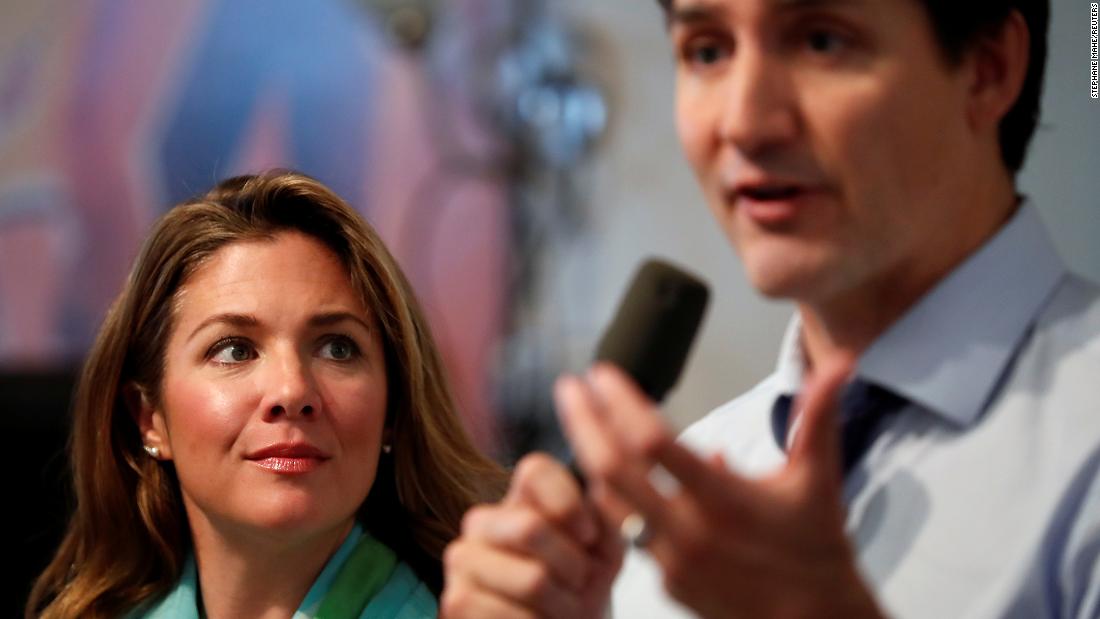
Grégoire Trudeau has mild symptoms and is feeling well, and will remain in isolation for 14 days, the Prime Minister's office said in a statement late Thursday.
She came down with mild flu-like symptoms Wednesday following a speaking engagement in the UK. Health officials are reaching out to those who've been in contact with her, the office said.
"The Prime Minister is in good health with no symptoms. As a precautionary measure and following the advice of doctors, he will be in isolation for a planned period of 14 days," the office said.
It added that on the advice of his doctors, he'll not be tested since he has no symptoms. He'll continue with his duties, and plans to address Canadians on Friday.
"For the same reason, doctors say there is no risk to those who have been in contact with him recently," his office said.
Grégoire Trudeau thanked those who've reached out to her and said she's doing well.
"Although I'm experiencing uncomfortable symptoms of the virus, I will be back on my feet soon," she said. "Being in quarantine at home is nothing compared to other Canadian families who might be going through this and for those facing more serious health concerns."
Canada has 147 confirmed cases of coronavirus, including one death. The virus has caused dozens of government officials around the world -- from administrators to heads of state -- to take precautionary measures after finding out they've been in contact with infected people.

Let's block ads! (Why?)


https://news.google.com/__i/rss/rd/articles/CBMiVmh0dHBzOi8vd3d3LmNubi5jb20vMjAyMC8wMy8xMi9hbWVyaWNhcy9zb3BoaWUtZ3JlZ29pcmUtdHJ1ZGVhdS1jb3JvbmF2aXJ1cy9pbmRleC5odG1s0gFaaHR0cHM6Ly9hbXAuY25uLmNvbS9jbm4vMjAyMC8wMy8xMi9hbWVyaWNhcy9zb3BoaWUtZ3JlZ29pcmUtdHJ1ZGVhdS1jb3JvbmF2aXJ1cy9pbmRleC5odG1s?oc=5

2020-03-13 07:07:28Z
52780657344637

Kamis, 12 Maret 2020

Trump discusses COVID-19 with Ireland PM - ABC News

[unable to retrieve full-text content]

  1. Trump discusses COVID-19 with Ireland PM  ABC News
  2. Ireland announces sweeping measures to combat coronavirus, schools to close for 2 weeks  Fox News
  3. Trump meets with Irish Prime Minister Leo Varadkar amid coronavirus spread - watch live stream today  CBS News
  4. Coronavirus: Republic of Ireland to close schools and colleges  BBC News
  5. Ireland closing schools, colleges to try and stunt coronavirus spread | TheHill  The Hill
  6. View Full Coverage on Google News

https://news.google.com/__i/rss/rd/articles/CBMiK2h0dHBzOi8vd3d3LnlvdXR1YmUuY29tL3dhdGNoP3Y9SDN5eHVfaHBuNEnSAQA?oc=5

2020-03-12 16:50:12Z
52780661130752

How Delhi’s Police Turned Against Muslims - The New York Times

NEW DELHI — Kaushar Ali, a house painter, was trying to get home when he ran into a battle.

Hindu and Muslim mobs were hurling rocks at each other, blocking a street he needed to cross to get to his children. Mr. Ali, who is Muslim, said that he turned to some police officers for help. That was his mistake.

The officers threw him onto the ground, he said, and cracked him on the head. They started beating him and several other Muslims. As the men lay bleeding, begging for mercy — one of them died two days later from internal injuries — the officers laughed, jabbed them with their sticks and made them sing the national anthem. That abuse, on Feb. 24, was captured on video.

“The police were toying with us,” Mr. Ali said. He recalled them saying, “Even if we kill you, nothing will happen to us.”

So far, they have been right.

India has suffered its worst sectarian bloodshed in years, in what many here see as the inevitable result of Hindu extremism that has flourished under the government of Prime Minister Narendra Modi. His party has embraced a militant brand of Hindu nationalism and its leaders have openly vilified Indian Muslims. In recent months Mr. Modi has presided over a raft of policies widely seen as anti-Muslim, such as erasing the statehood of what had been India’s only Muslim-majority state, Jammu and Kashmir.

Now, more evidence is emerging that the Delhi police, who are under the direct command of Mr. Modi’s government and have very few Muslim officers, concertedly moved against Muslims and at times actively helped the Hindu mobs that rampaged in New Delhi in late February, burning down Muslim homes and targeting Muslim families.

  • A police commander said that as the violence erupted — at that point mostly by Hindu mobs — officers in the affected areas were ordered to deposit their guns at the station houses. Several officers during the violence were later overheard by New York Times journalists yelling to one another that they had only sticks and that they needed guns to confront the growing mobs. Some researchers accuse the police force of deliberately putting too few officers on the streets, with inadequate firepower, as the violence morphed from clashes between rival protesters into targeted killings of Muslims.

  • Two thirds of the more than 50 people who were killed and have been identified were Muslim. Human rights activists are calling it an organized massacre.

  • Though India’s population is 14 percent Muslim and New Delhi’s is 13 percent, the total Muslim representation on the Delhi police force is less than 2 percent.

India’s policing culture has long been brutal, biased, anti-minority and almost colonial in character, a holdover from the days of British rule when the police had no illusions of serving the public but were used to suppress a restive population.

But what seems to be different now, observers contend, is how profoundly India’s law enforcement machinery has been politicized by the Bharatiya Janata Party, Prime Minister Narendra Modi’s Hindu-nationalist governing bloc.

Police officials, especially in states controlled by Mr. Modi’s party, have been highly selective in their targets, like a Muslim school principal in Karnataka who was jailed for more than two weeks on sedition charges after her students performed a play about a new immigration law that police officials said was critical of Mr. Modi.

Some judges have also seemed to be caught up — or pushed out — by a Hindu-nationalist wave.

A Delhi judge who expressed disbelief that the police had yet to investigate members of Mr. Modi’s party who have been widely accused of instigating the recent violence in Delhi was taken off the case and transferred to another state. And at the same time that the Supreme Court has made a string of rulings in the government’s favor, one of the judges, Arun Mishra, publicly praised Mr. Modi as a “visionary genius.”

All of this is emboldening Hindu extremists on the street.

The religiously mixed and extremely crowded neighborhoods in northeastern Delhi that were on fire in late February have cooled. But some Hindu politicians continue to lead so-called peace marches, trotting out casualties of the violence with their heads wrapped in white medical tape, trying to upend the narrative and make Hindus seem like the victims, which is stoking more anti-Muslim hatred.

Some Muslims are leaving their neighborhoods, having lost all faith in the police. More than 1,000 have piled into a camp for internally displaced people that is rising on Delhi’s outskirts.

Muslim leaders see the violence as a state-sanctioned campaign to teach them a lesson. After years of staying quiet as Hindu lynch mobs killed Muslims with impunity and Mr. Modi’s government chipped away at their political power, India’s Muslim population awoke in December and poured into the streets, along with many other Indians, to protest the new immigration law, which favors migrants belonging to every major religion in South Asia — except for Muslims.

Mr. Modi’s government, Muslim leaders say, is now trying to drive the whole community back into silence.

“There’s a method to this madness,” said Umar Khalid, a Muslim activist. “The government wants to bring the entire Muslim community to their knees, to beg for their lives and beg for their livelihoods.”

“You can read it in their books," he said, referring to foundational texts by Hindu nationalists. “They believe India’s Muslims should live in perpetual fear.”

Mr. Modi has said little since the bloodshed erupted, except for a few anodyne tweets urging peace. Delhi police officials deny an anti-Muslim bias and said they “acted swiftly to control law and order,” which both Muslims and Hindus in those neighborhoods have said was not true. The police responded “without favoring any person on religious lines or otherwise,” according to a written reply to questions, provided by M.S. Randhawa, a police spokesman.

Police officials said that Mr. Ali and the other Muslim men were hurt by protesters and rescued by the police — though videos clearly show them being hit by police officers. Police officials also pointed out that one officer was killed and more than 80 injured; videos show a huge crowd of Muslim protesters attacking outnumbered officers.

The violence in New Delhi fits a pattern, experts say, of chaos being allowed to rage for a few days — with minorities being killed — before the government brings it under control.

In 1984, under the Congress party, which often bills itself as representing the interests of minorities, the police in New Delhi stood back for several days as mobs massacred 3,000 Sikhs.

In 1993, again under a Congress government, riots swept Mumbai and hundreds of Muslims were killed.

In 2002 in Gujarat, when Mr. Modi was the state’s chief minister, Hindu mobs massacred hundreds of Muslims. Mr. Modi was accused of complicity, though he was cleared by a court.

Several retired Indian police commanders said that the rule in quelling communal violence was to deploy maximum force and make many arrests, neither of which happened in Delhi.

Ajai Raj Sharma, a former commissioner, called the performance “unexplainable.” “It can’t be forgiven,” he said.

When the violence started on Feb. 23 — as Hindu men gathered to forcibly eject a peaceful Muslim protest near their neighborhood — much of it became two-sided. By day’s end, both Muslims and Hindus had been attacked, and dozens had been shot, apparently with small-bore homemade guns.

But by Feb. 25 the direction had changed. Hindu mobs fanned out and targeted Muslim families. Violence crackled in the air.

Police officers watched as mobs of Hindus, their foreheads marked by saffron stripes, prowled the streets with baseball bats and rusty bars, looking for Muslims to kill. The sky was filled with smoke. Muslim homes, shops and mosques were burned down.

When a reporter for The New York Times tried to speak to residents standing near police officers that day, a mob of men with darting eyes surrounded him and ripped the notebook out of his hands. When the reporter asked police officers for help, one said: “I can’t. These young men are very volatile.”

The home ministry, which controls Delhi’s police force and is led by Amit Shah, one of the most combative Hindu nationalists in the B.J.P., has come under heavy criticism for the policing failures. Delhi police officials denied being instructed by the central government to go easy on the troublemakers. The home ministry did not respond to repeated requests for comment.

On Thursday, during a debate in parliament, Mr. Shah vowed to bring the culprits to justice, “regardless of their caste, religion or political affiliations.’’ He has defended the police and called the violence a conspiracy, saying investigators found links to the Islamic State. Many observers question how much, if at all, the Islamic State had anything to do with what unfolded.

And then there’s the composition of the police. The Delhi force, numbering around 80,000, has fewer than 2,000 Muslim officers and just a handful of Muslim commanders, according to an analysis done in 2017 by the Commonwealth Human Rights Initiative. Delhi police officials did not deny this, and Muslim leaders said that police behavior was biased across India.

“Indian police are extremely colonial and caste-ist,” said Shahid Siddiqui, a former member of Parliament. Police behavior, he said, is always “more violent and aggressive toward the weak.”

India’s population is about 80 percent Hindu, and gangs of Hindus threatened Muslims in several Delhi neighborhoods to leave before the Hindu holiday Holi that was celebrated this week.

One Muslim woman, who goes by the name Baby, opened her door a few days ago to find 50 men outside with a notebook in their hands, listing the addresses of Muslims. She packed up. She may be leaving soon.

“O, Allah, why didn’t you make me a Hindu?” she said, her voice quavering. “Is it my fault that I was born a Muslim?”

Shalini Venugopal contributed reporting.

Let's block ads! (Why?)


https://news.google.com/__i/rss/rd/articles/CBMiR2h0dHBzOi8vd3d3Lm55dGltZXMuY29tLzIwMjAvMDMvMTIvd29ybGQvYXNpYS9pbmRpYS1wb2xpY2UtbXVzbGltcy5odG1s0gFLaHR0cHM6Ly93d3cubnl0aW1lcy5jb20vMjAyMC8wMy8xMi93b3JsZC9hc2lhL2luZGlhLXBvbGljZS1tdXNsaW1zLmFtcC5odG1s?oc=5

2020-03-12 16:48:02Z
52780657353573

Trump meets with Irish Prime Minister Leo Varadkar amid coronavirus spread - watch live stream today - CBS News

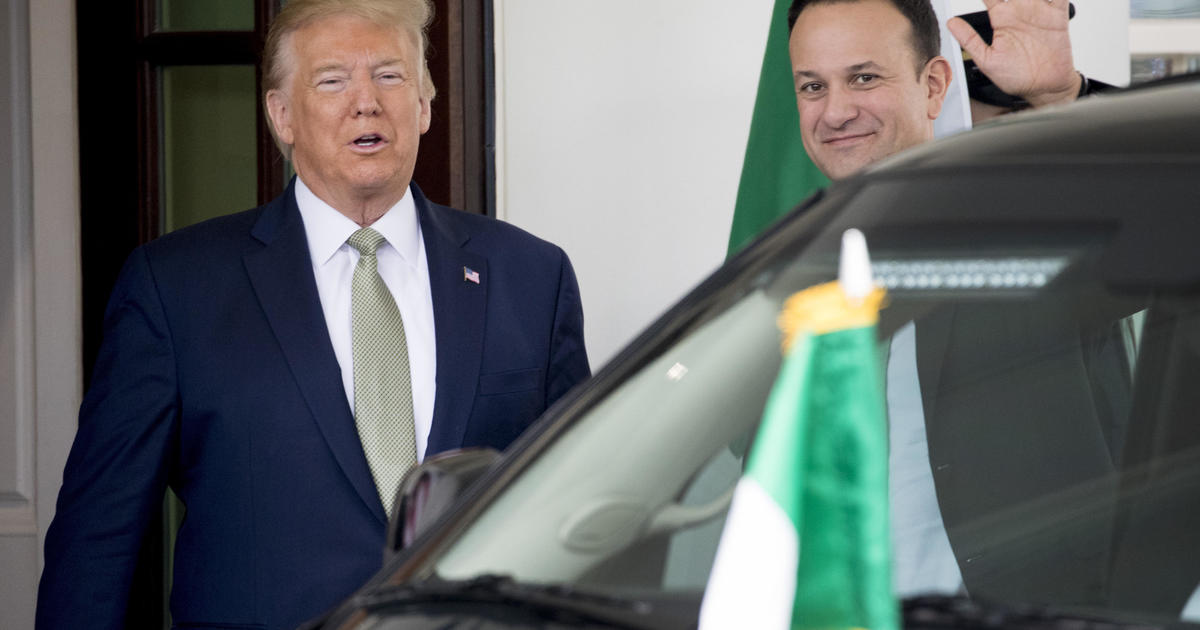
President Trump told reporters "the markets are gonna be just fine" as he welcomed Irish Prime Minister Leo Varadkar to the White House Thursday to celebrate ties between the U.S. and Ireland. Stocks plunged 7% after the opening bell Thursday morning, halting trading for 15 minutes as fears and fallout over coronavirus.

The visit comes in the wake of Mr. Trump's Wednesday night announcement to impose travel restrictions on Europe due to the global spread of the deadly coronavirus. The new travel restrictions Mr. Trump announced Wednesday night don't apply to Ireland, or to the United Kingdom.

In the Oval Office Thursday, Mr. Trump addressed criticism that he decided to restrict travel from Europe without consulting European leaders. Mr. Trump explained it takes a long time to make individual calls to world leaders, and claimed Europe doesn't alert the U.S. when it raises taxes on the U.S. Mr. Trump insisted his announcement was "clear," even though his own White House had to clarify the announcement. 

"We had to make a decision, and we didn't want to take time," Mr. Trump told reporters Thursday. 

Mr. Trump said his team hasn't discussed travel restrictions within the United States, but he didn't rule it out, as the National Guard moves into a New York suburb to establish the country's first containment zone. The president insisted that he has more authority than most people know, and hinted that he's been reading up on the Stafford Act, the federal law outlining the means of deploying federal natural disaster assistance to state and local governments. 

"We need a little separation until such time as this goes away. It's gonna go away, it's gonna go away," Mr. Trump told reporters Thursday. "I was watching Scott, I was watching Scott this morning, and he was saying within two months," Mr. Trump said, seemingly  But in the meantime, we want to lose as few people as possible, so important."

The president's meeting with the Irish prime minister is one of the few events that is charging ahead as the U.S. grapples with the spread of the coronavirus. There are more than 1,300 confirmed cases of the illness in the country, according to Johns Hopkins University.

As of Thursday there were 43 confirmed cases in Ireland. 

Varadkar is set to attend the annual "Friends of Ireland" luncheon hosted by House Speaker Nancy Pelosi on Capitol Hill on Thursday. While Mr. Trump went to the luncheon in the first three years of his presidency, he is skipping this year's event, citing the impeachment inquiry launched by House Democrats last year. Mr. Trump told reporters Thursday he's too busy. 

"Since the speaker has chosen to tear this nation apart with her actions and her rhetoric, the president will not participate in moments where she so often chooses to drive discord and disunity," White House spokesman Judd Deere said earlier this week.

Officials in Washington, D.C., and around the nation have begun to cancel large events due to the coronavirus, which has spread to more than 100 countries. At the White House, public tours have been halted and in the U.S. Capitol, congressional leaders are nearing a pause on tours. 

Mr. Trump also canceled upcoming events in Nevada, Colorado and Wisconsin "out of an abundance of caution from the coronavirus outbreak," White House press secretary Stephanie Grisham said late Wednesday.

The White House and Congress are weighing a legislative package to provide economic relief to businesses and people impacted by the virus. Mr. Trump said he wants paid sick leave to be a part of that. 

Let's block ads! (Why?)


https://news.google.com/__i/rss/rd/articles/CBMigwFodHRwczovL3d3dy5jYnNuZXdzLmNvbS9uZXdzL3RydW1wLWlyaXNoLXByaW1lLW1pbmlzdGVyLWxlby12YXJhZGthci1tZWV0aW5nLWNvcm9uYXZpcnVzLXNwcmVhZC13YXRjaC1saXZlLXN0cmVhbS10b2RheS0yMDIwLTAzLTEyL9IBhwFodHRwczovL3d3dy5jYnNuZXdzLmNvbS9hbXAvbmV3cy90cnVtcC1pcmlzaC1wcmltZS1taW5pc3Rlci1sZW8tdmFyYWRrYXItbWVldGluZy1jb3JvbmF2aXJ1cy1zcHJlYWQtd2F0Y2gtbGl2ZS1zdHJlYW0tdG9kYXktMjAyMC0wMy0xMi8?oc=5

2020-03-12 16:45:59Z
CAIiEFUhbEIrEq07c5PTWqd6qT4qGQgEKhAIACoHCAowyNj6CjDyiPICML_fxAU

Coronavirus outbreak: health officials testify before the House oversight committee – watch live - Guardian News

[unable to retrieve full-text content]

  1. Coronavirus outbreak: health officials testify before the House oversight committee – watch live  Guardian News
  2. See expert's stark warning about future of the virus  CNN
  3. Top US health official says the coronavirus is 10 times 'more lethal' than the seasonal flu  CNBC
  4. Dr. Manny Alvarez: In coronavirus response, progress being made  Fox News
  5. Has Dr. Anthony Fauci made Trump irrelevant to the coronavirus crisis? | TheHill  The Hill
  6. View Full Coverage on Google News

https://news.google.com/__i/rss/rd/articles/CBMiK2h0dHBzOi8vd3d3LnlvdXR1YmUuY29tL3dhdGNoP3Y9dE8tX2FWLXY3SUHSAQA?oc=5

2020-03-12 15:01:19Z
52780657590638