Senin, 31 Mei 2021

China to allow couples to have three children in face of demographic crisis - Financial Times

China will allow couples to have three children, loosening its historic family planning policies in the face of a looming demographic crisis just weeks after reporting that its population grew at the slowest rate in decades.

The Chinese Communist party’s politburo, which comprises its 25 most senior officials, concluded that the new “three-child policy” was intended to “actively address the ageing population, and maintain China’s natural advantage in human resources”, according to Xinhua, the state media agency.

Experts, the public and China’s central bank have called for the government to abolish birth limits entirely after the census published this month showed the population grew 5.4 per cent from 1.34bn in 2010 to 1.41bn in 2020 — the lowest rate of increase between censuses since the People’s Republic of China began collecting data in 1953.

But Beijing has been unwilling to break with the decades-old population control apparatus used to enforce a widely unpopular one-child policy, often employing brutal means, including forced abortions and sterilisations. Abolishing population controls would mean having to repurpose a huge part of its civil service, as well as suggest an embarrassing about-turn.

Demographers have said rising incomes, urbanisation and the increased costs of raising children had led to a long-term decline in fertility rates that would be extremely difficult to reverse. In the past five years, China’s official fertility rate has fallen sharply to 1.3 births per woman, one of the world’s lowest.

Column chart of Total (bn) showing China’s population is growing at its slowest rate in decades . . .

The one-child policy was introduced from 1979-80 as the population approached 1bn. The cap was lifted to two children in 2015 but the change had little impact on the birth rate.

As a result of the one-child policy, many Chinese children are in a so-called 4-2-1 family structure, meaning they will have to support four grandparents and two parents on one income. The UN projected that China’s old-age dependency ratio would double to more than 40 per cent by 2040, putting severe pressure on the pension system.

A rapidly ageing population will also shrink the labour pool, putting pressure on economic growth.

Experts said the decision to raise the cap to allow three children would not reverse the overall trend.

Column chart of Number of new births (m) showing . . . while birth rates in the country have fallen sharply

“The policy might be able to slightly slow, but cannot stop, the huge decline in births. It could bring a few tens of thousands of new births, while in recent years there has been a drop of 60-70,000 per year,” said Huang Wenzheng, a demographer at the Center for China and Globalization, a Beijing-based think-tank.

Huang added that existing policies carried sufficient exemptions that nearly anyone who was not a government employee could already have three children — they simply did not wish to.

The government previously said it would provide more “appropriate support” for parents to help convince couples to have more children. Peng Xizhe, professor of demography at Fudan University in Shanghai, said this would probably mean help with early-age care and paternity leave.

“Opening up to three children on the one hand keeps in place the concept of population controls, while also letting people who want to have children realise that wish,” he said.

The announcement of the three-child policy was met with a swift backlash on social media, despite widespread censorship of government criticism, reflecting concerns that the measures would not address the underlying reasons why Chinese were not having more children.

“I recommend you first resolve the fundamental problems of child support plus . . . the unfair treatment of women in the workplace, before asking them to have children!” read the most-liked response under the Xinhua announcement on Weibo, the microblogging platform.

“So many of us were the only child in our generation. Back then [the government] fined us. Now they want us to raise four ageing parents plus three children . . . only in your dreams,” read another reply.

Additional reporting by Nian Liu and Xinning Liu in Beijing

Adblock test (Why?)


https://news.google.com/__i/rss/rd/articles/CBMiP2h0dHBzOi8vd3d3LmZ0LmNvbS9jb250ZW50L2JjODg0ZWUwLTk0ZDktNGUyYS1hZDRiLTE0MzI5YTdhMjUzZtIBAA?oc=5

2021-05-31 08:48:56Z
52781634479788

China crisis: Xi Jinping 'could be overthrown' as Wuhan lab leak theory gains momentum - Daily Express

Chinese Communist leader Xi Jinping would be toppled and Beijing would be liable for unprecedented reparations around the world if the Wuhan lab leak theory is proven true, according to a leading WHO advisor. Jamie Metzl told LBC's Maajid Nawaz that if the Wuhan lab leak theory on the origin of Covid is proved true, it would be a "massive geopolitical blow" for China. On Sunday, it was revealed that British intelligence services are now considering the theory that COVID-19 originated in and was leaked from a lab in Wuhan as "feasible".

Mr Metzl said: "In China, if it was absolutely proven, I think there is a real chance Xi Jinping could be overthrown.

"There would be claims for reparations around the world against China.

"It would be a massive geopolitical blow to China.

"Just think of the anger of everyone around the world who has lost a spouse, a child, parents, would feel. Not just at the original mistake but the criminal cover-up afterwards."

JUST IN: Wuhan lab worker's wife 'died from Covid in 2019' in bombshell claim

Mr Nawaz told LBC listeners that the "consequences are incredibly serious" for the Chinese regime if the theory is proved.

He said "the entire planet for the first time in history has been locked down because of this thing" and the Chinese Communist Party would have to "foot the bill" for that.

The radio broadcaster said China will face the full force of the international community.

The move from British intelligence services to step up research into the lab leak claims has sparked a sharpening of tension with Beijing.

China's foreign ministry accused the US of "political manipulation and blame shifting".

Meanwhile, MPs in the UK are demanding a fresh investigation, with the Conservative MP Tom Tugendhat telling the Sunday Times: “The silence coming from Wuhan is troubling.

"We need to open the crypt and see what happened to be able to protect ourselves in the future.

"That means starting an investigation, along with partners around the world and in the WHO.”

Adblock test (Why?)


https://news.google.com/__i/rss/rd/articles/CBMifmh0dHBzOi8vd3d3LmV4cHJlc3MuY28udWsvbmV3cy93b3JsZC8xNDQzNDA2L0NoaW5hLWNyaXNpcy1XdWhhbi1sYWItbGVhay1Db3ZpZC1CZWlqaW5nLVhpLUppbnBpbmctQ29tbXVuaXN0LUNDUC1sYXRlc3QtbmV3cy12btIBggFodHRwczovL3d3dy5leHByZXNzLmNvLnVrL25ld3Mvd29ybGQvMTQ0MzQwNi9DaGluYS1jcmlzaXMtV3VoYW4tbGFiLWxlYWstQ292aWQtQmVpamluZy1YaS1KaW5waW5nLUNvbW11bmlzdC1DQ1AtbGF0ZXN0LW5ld3Mtdm4vYW1w?oc=5

2021-05-31 06:33:00Z
52781630818271

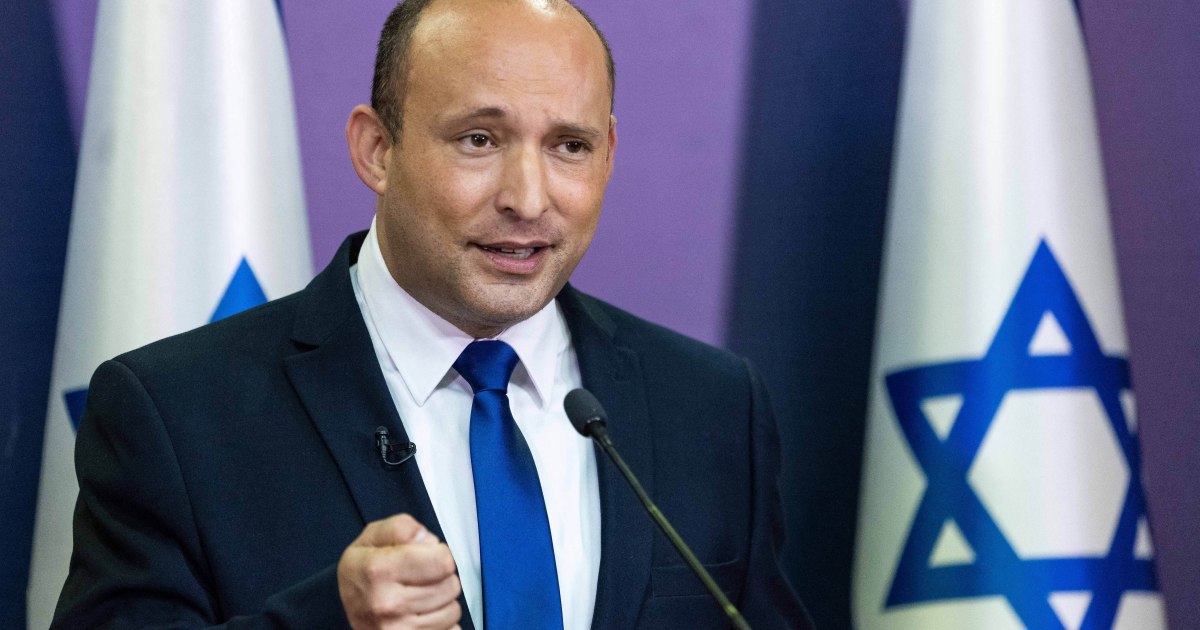
Who is Naftali Bennett, Israel’s potential prime minister? - Al Jazeera English

Former defence chief and Netanyahu ally officially parts ways with Israeli PM, announces bid to become prime minister.

Naftali Bennett has moved a step closer to replacing Israel’s veteran prime minister Benjamin Netanyahu.

Bennett is a multi-millionaire former tech entrepreneur who made a name in politics with right-wing, religious-nationalist rhetoric.

The 49-year-old, who has made pitches to far-right voters throughout his career, leads the Yamina party, which has called for Israel to annex parts of the occupied West Bank.

A firebrand politician who has not shied away from controversy, Bennett is ultra-liberal on the economy and takes an aggressive line against Iran.

He shares this ideology with Netanyahu and has served in several of the Likud leader’s governments. In recent years, however, the two have become increasingly opposed.

On Sunday, Bennett said he would join a governing coalition that could end Netanyahu’s 12-year rule.

He agreed to join centrist Yair Lapid in a coalition to remove the prime minister. Lapid has offered to share power, letting Bennett serve the first term rotating as prime minister.

A former special forces commando, Bennett is the son of US-born parents and lives with his wife Galit and four children in the central city of Raanana.

He entered politics after selling his tech start-up for $145m in 2005, and the next year became chief of staff to Netanyahu, who was then in opposition.

After leaving Netanyahu’s office, Bennett in 2010 became head of the Yesha Council, which lobbies for Jewish settlers in the occupied West Bank.

He then took politics by storm in 2012 when he took charge of the far-right Jewish Home party, which was facing annihilation.

He increased its parliamentary presence fourfold, while making headlines with a series of incendiary comments about the Palestinians.

In 2013, he said Palestinian “terrorists should be killed, not released”.

He has courted controversy on several occasions, once stating that the West Bank is not under occupation because “there was never a Palestinian state here”, and that the Israeli-Palestinian conflict could not be resolved but must be endured.

Beyond holding the defence portfolio, Bennett has served as Netanyahu’s economy minister and education minister.

He re-branded Jewish Home as Yamina (Rightward) in 2018, and was part of Netanyahu’s coalition which collapsed the same year.

But he was not asked to join a Netanyahu-led unity government in May last year – a move seen as an expression of the prime minister’s personal contempt towards him, despite their shared ideology.

In opposition and with the coronavirus pandemic raging in 2020, Bennett dampened his right-wing rhetoric to focus on the health crisis, moving to broaden his appeal by releasing plans to contain the virus and aid the economy.

Adblock test (Why?)


https://news.google.com/__i/rss/rd/articles/CBMiZGh0dHBzOi8vd3d3LmFsamF6ZWVyYS5jb20vbmV3cy8yMDIxLzUvMzEvbmFmdGFsaS1iZW5uZXR0LXdoby1pcy1pc3JhZWxzLW5ldy1wb3RlbnRpYWwtcHJpbWUtbWluaXN0ZXLSAWhodHRwczovL3d3dy5hbGphemVlcmEuY29tL2FtcC9uZXdzLzIwMjEvNS8zMS9uYWZ0YWxpLWJlbm5ldHQtd2hvLWlzLWlzcmFlbHMtbmV3LXBvdGVudGlhbC1wcmltZS1taW5pc3Rlcg?oc=5

2021-05-31 06:53:22Z
52781630473983

Minggu, 30 Mei 2021

How Biden came around to the Wuhan lab-leak theory - Financial Times

When Joe Biden, US president, last week ordered US intelligence to intensify efforts to determine the origins of Covid-19, he gave fresh life to the theory that the virus may have leaked from the Wuhan Institute of Virology.

Biden said that US intelligence had “coalesced around two scenarios” — that the virus had either emerged naturally or was the result of a lab accident.

It was the first time that the president had given credence to the possibility that the virus had leaked from a lab — a notion widely slammed as a conspiracy theory when Donald Trump first made the claim.

Current and former officials said there were several reasons why the Biden administration was willing to publicly entertain a theory that Democrats had once slammed.

A crucial factor was that critics were more open to the lab-leak theory now that Trump, who was viewed as wanting to vilify China to deflect blame for his handling of the pandemic, was out of office.

They also said that Biden was reacting to what the intelligence had found. He is now under political pressure to find answers.

“The Biden administration has now studied the mountain of disturbing evidence that we were confronted with in the last few months of the Trump administration,” said David Asher, who led a state department investigation into the origins of Covid. “It is jaw dropping. And as they have noted, a great deal more needs to be assessed.”

Days before Biden was sworn in, the state department issued a fact sheet on the Wuhan institute which said that several researchers had fallen ill with Covid-like symptoms before the first publicly known case. It also said that the institute had worked secretly with the Chinese military.

Critics did not take the claim seriously because of the view that Mike Pompeo, secretary of state, tended to politicise intelligence. People were also focused on the aftermath of the riots on January 6 and the inauguration.

“We assumed the fact sheet wasn’t going to make immediate headlines. We wanted to put the information into the record so that people could reckon with these facts when tensions and fevers had dropped,” said David Feith, a former state department official who was involved in the release.

In March, Asher said publicly that some Wuhan staff were so sick that they were hospitalised. That and a recent Wall Street Journal story that three staff were hospitalised, helped focus attention on the lab-leak theory.

But one person familiar with the debate said the driving factor was a shift among scientists who had been wary of helping Trump before the election or angering influential scientists who had dismissed the theory. He said this had helped make Democrats more willing to consider the theory.

“The most important thing that has happened is that prominent virologists have since spoken out,” he said.

In a letter to the Science journal, a group of 18 prominent scientists said that both theories were “viable” and should be taken “seriously” until sufficient data were obtained. They said the recent investigation that the World Health Organization conducted with China had not given balanced consideration to both scenarios.

“Even those of us working the issue inside the government were not well aware of how much scientific opinion was on our side because scientists were generally not speaking up, but you have had certain dams break over the past few months,” said Feith, referring to developments including the letter and the WHO investigation.

Anthony Fauci, head of the National Institute of Allergy and Infectious Diseases, also appeared to change his stance. Last year, he said the science “strongly indicates” that the virus emerged naturally, but he recently said he was “not convinced” and backed an investigation.

While Biden was just outlining the view of the intelligence community in his highly unusual statement, his willingness to make their tentative conclusions public also shone more attention on the lab-leak theory.

Mathew Burrows, a former senior intelligence official, said he could not remember a president making such a statement, saying that they have historically not wanted to be viewed as trying to force a conclusion.

“There are obviously Republicans who are trying to criticise anything that would seem to be a weak response to China, so I think Biden wants to show that he will not shy away from charging them [China] if there is united agreement in the intelligence community on the fact that the virus came out of the Wuhan lab,” Burrows said.

Mike Gallagher, a Republican congressman who has introduced a bill to declassify all the intelligence related to the investigation, also said that Biden appeared to be responding to political pressure, particularly after members of his team called on China to allow a transparent investigation — something few experts believe Beijing will allow.

“Biden was feeling the pressure,” said Gallagher. “They felt a little bit of blowback . . . but it’s a good move.”

One person familiar with the situation said the National Intelligence Council, which collates information from the entire intelligence community, produced two reports last year assessing US intelligence on the origins of Covid. The director for national intelligence declined to comment.

Those efforts, coupled with a third “scrub” of the intelligence this year, led to Biden saying last week that two of the 18 branches of the intelligence community leaned towards the natural origin scenario, while a third was more inclined towards the lab-leak theory.

Biden said the three had only “low or moderate confidence” in their conclusions while the other branches did not have enough evidence. That has sparked concern that 90 days is not sufficient for intelligence officials to reach any solid determination.

“The community as a whole is far away from reaching anything that we could call even a halfway firm conclusion,” said Paul Pillar, a former senior CIA official. “The fact that many of the agencies involved have not reached a consensus even for a ‘low confidence’ judgment tells you they’re a long way away from anything conclusive.”

Follow Demetri Sevastopulo on Twitter

Adblock test (Why?)


https://news.google.com/__i/rss/rd/articles/CBMiP2h0dHBzOi8vd3d3LmZ0LmNvbS9jb250ZW50LzkyM2UwMjU2LTdmN2UtNDNlZi1iNGZlLTY0YzA2NmI4YjcwYtIBAA?oc=5

2021-05-31 04:00:41Z
52781630818271

Flooding forces hundreds from their homes in New Zealand - Sky News

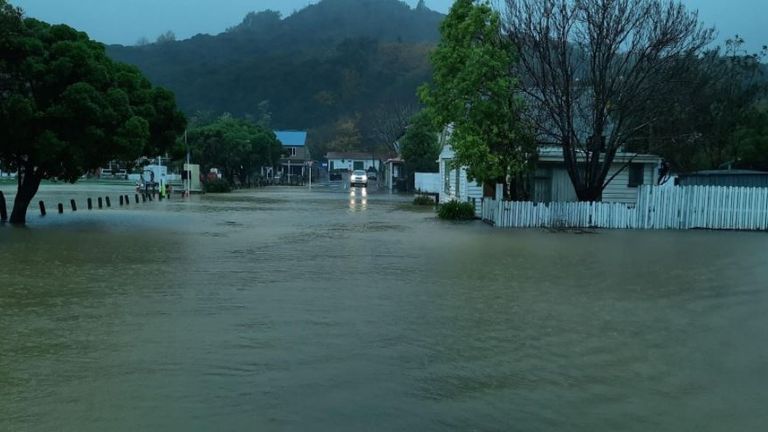
Hundreds of people have had to leave their homes as parts of New Zealand are hit with what has been described as a one-in-100-year deluge.

Worst-hit was the province of Canterbury in the country's South Island, where at least 300 homes had to be evacuated overnight.

Several roads, schools and offices were closed.

NZ Defence Force helping people during flooding in NZ's South Island. Pic: NZDF
Image: Soldiers have been sent to the area to help people leave their homes. Pic: NZ Defence Force

A state of emergency was declared in the region following similar declarations on Sunday in the nearby areas of Timaru, Selwyn, and Ashburton.

In Ashburton, about 50 miles southwest of Christchurch, 19 roads were closed and three bridges had collapsed or been washed away, according to NZ news website Stuff.

The town's mayor Neil Brown said on Facebook that the river was running at 1400 cumecs (cubic metres per second) instead of its usual 10 cumecs.

He told the NZ Herald that "half of Ashburton" would need to be evacuated if the river's levees broke but there was "still quite a bit of capacity".

More on New Zealand

"We really need it to stop raining to let those rivers drop," he added.

Flooding in the town of Akaroa, on NZ's South Island. Pic: Christchurch City Council
Image: Flooding in the town of Akaroa, on New Zealand's South Island. Pic: Christchurch City Council

The New Zealand Defence Force used helicopters to rescue three people stranded in flooding in the surrounding area.

The Royal NZ Air Force said the crew of one of its NH90 helicopters had rescued a man from a tree surrounded by floodwater in Darfield and an elderly couple from a car roof in the small town of Ashburton Forks.

In Akaroa, a small town about 50 miles southeast of Christchurch, Christchurch City Council said flooding appeared to be caused by blocked pipes.

Residents were warned the water could be contaminated and they should take precautions such as changing out of wet clothing and washing their hands as soon as possible.

A number of surrounding roads have been closed due to slips.

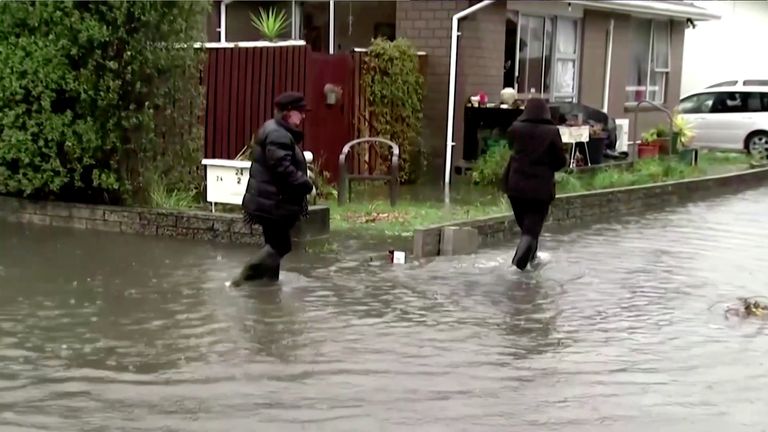
People wade through floodwaters in Canterbury, New Zealand, May 30, 2021, in this still image obtained from a video. TVNZ/via Reuters
Image: The province of Canterbury was worst-hit by the flooding. Pic: TVNZ/Reuters

Further south, Environment Southland activated its flood warning system as persistent rain caused river to rise.

The country's MetService issued warnings for heavy rain in Canterbury and elsewhere until later on Monday morning UK time.

It said that the main focus would be north of the Rakaia River in the Canterbury Plains, where 50-90mm could accumulate, on top of the rain that has already fallen during this event - more than 400mm in some parts.

The government announced a NZ$100,000 (£51,000) fund to support Canterbury people affected by the floods.

New Zealand's acting minister for emergency management Kris Faafoi said: "While it is still very early to know the full cost of the damage, we expect it to be significant and this initial contribution will help those communities to start to get back on their feet."

Adblock test (Why?)


https://news.google.com/__i/rss/rd/articles/CBMiXGh0dHBzOi8vbmV3cy5za3kuY29tL3N0b3J5L2Zsb29kaW5nLWZvcmNlcy1odW5kcmVkcy1mcm9tLXRoZWlyLWhvbWVzLWluLW5ldy16ZWFsYW5kLTEyMzIxMjE40gFgaHR0cHM6Ly9uZXdzLnNreS5jb20vc3RvcnkvYW1wL2Zsb29kaW5nLWZvcmNlcy1odW5kcmVkcy1mcm9tLXRoZWlyLWhvbWVzLWluLW5ldy16ZWFsYW5kLTEyMzIxMjE4?oc=5

2021-05-31 03:22:30Z
52781629111093

Israel coalition government a threat to security, warns Netanyahu - BBC News

Israel's Prime Minister Benjamin Netanyahu has warned that a proposed new unity government would be "a danger for the security" of the country.

He urged right-wing politicians not to support a deal after ultra-nationalist leader Naftali Bennett said he would join talks with centrist Yair Lapid.

Mr Lapid has until Wednesday to form a new coalition government.

If successful, it would end Mr Netanyahu's time as the country's longest serving prime minister.

Mr Netanyahu, who is on trial for fraud, fell short of a decisive majority at a general election in March. It was the country's fourth inconclusive vote in two years - and again he failed to secure coalition allies.

"Don't form a left-wing government - such a government is a danger to Israel's security and future," the 71-year-old, who has been in power for 12 years and has dominated Israeli politics for a generation, said on Sunday. He did not elaborate.

Mr Netanyahu accused Mr Bennett of "misleading the public" and of carrying out "the fraud of the century" - a reference to the Yamina party leader's previous public promises not to join forces with Mr Lapid.

Mr Bennett, 49, earlier announced that his party would join talks to form a governing coalition in a televised address.

"Mr Netanyahu is no longer trying to form a right-wing government because he knows full well that there isn't one. He is seeking to take the whole national camp, and the whole country, with him on his personal last stand," Mr Bennett said.

"I will do everything to form a national unity government with my friend Yair Lapid."

Before the announcement, Israeli media reported that under the proposed terms of the deal, Mr Bennett would replace Mr Netanyahu as prime minister and later give way to Mr Lapid, 57, in a rotation agreement. The arrangement has not been officially confirmed.

The proposed coalition would bring together factions from the right, the left and the centre of Israeli politics. While the parties have little in common politically, they are united in their desire to see Mr Netanyahu's time in office come to an end.

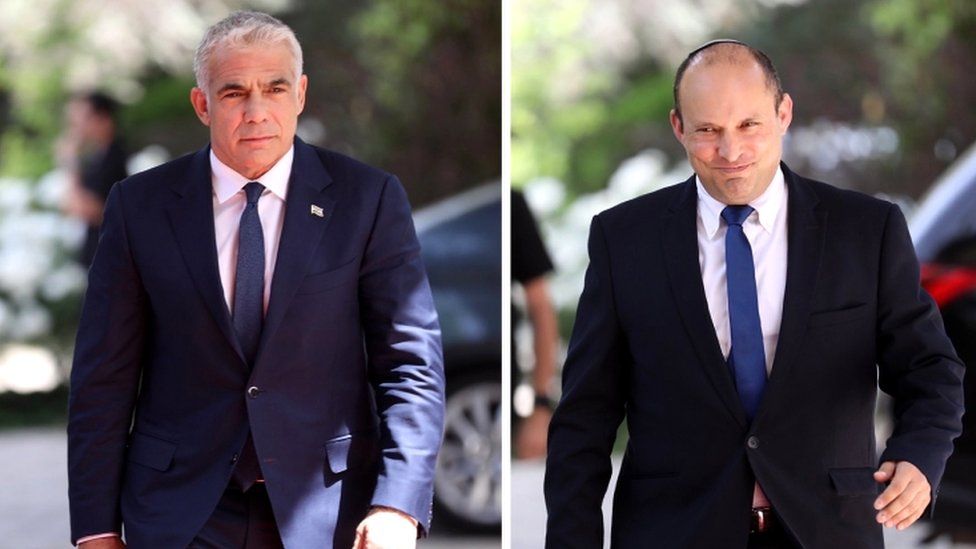
Leader of the Yemina party, Naftali Bennett (R) and leader of the Yessh Atid party, Yair Lapid (L)
EPA

Mr Lapid, a former finance minister, was given until 2 June to form a new coalition government after Mr Netanyahu failed to do so. His Yesh Atid party came second to Mr Netanyahu's right-wing Likud at the last election.

Mr Bennett's party holds a crucial six seats in the 120-member parliament that would help give the proposed opposition coalition a clear majority.

2px presentational grey line

Netanyahu fights on

Analysis box by Yolande Knell, Middle East correspondent

After an evening of high political drama on Sunday, Israel is much closer to a new coalition that will unseat its long-time prime minister. But Benjamin Netanyahu should not be written off.

He was quick to respond to the latest announcement with his own appeal to right-wing members of Naftali Bennett's Yamina party - and those of Gideon Saar's New Hope - to not join the agreement.

He taunted them by asking "Who will take care of settlements?" and suggested the proposed unity government would offer a weak security cabinet that would be unable to stand up to Israel's rival, Iran.

If he chips away just a couple of members of parliament with these attacks, then the prospective government could tumble.

And even if this coalition does get sworn in, it will be a fragile one - bringing together parties from across the political spectrum with stark ideological differences. To stay in power, it will be forced to kick many sensitive issues into the long grass.

2px presentational grey line

On Saturday night, Mr Netanyahu's Likud party made an offer to Mr Bennett and the leader of another potential coalition party to share the premiership in a three-way split.

However, his offer was rejected. But the prime minister repeated the same option on Sunday.

Under Israel's electoral system of proportional representation, it is difficult for a single party to gain enough seats to form a government outright. Smaller parties are usually needed to make up the numbers needed for a coalition.

Mr Lapid was initially given a 28-day mandate to form a government, but this was interrupted by the recent 11-day conflict in Gaza.

One of his potential coalition partners, the Arab Islamist Raam party, broke off talks because of the violence. There were also clashes in Israeli cities between mixed Arab and Jewish populations.

Adblock test (Why?)


https://news.google.com/__i/rss/rd/articles/CBMiNWh0dHBzOi8vd3d3LmJiYy5jby51ay9uZXdzL3dvcmxkLW1pZGRsZS1lYXN0LTU3MzAyODE00gE5aHR0cHM6Ly93d3cuYmJjLmNvLnVrL25ld3Mvd29ybGQtbWlkZGxlLWVhc3QtNTczMDI4MTQuYW1w?oc=5

2021-05-31 00:57:41Z
52781630473983

Nigeria: 'About 200' children abducted after school ambushed by gunmen on motorbikes - Sky News

Armed men on motorcycles have kidnapped a large number of children following the ambush of a school in Nigeria.

The pupils were at the Salihu Tanko Islamic School in Rafi, in the north-central Nigerian state of Niger, when they were abducted by the men, who were firing "indiscriminately", said state police spokesman Wasiu Abiodun.

He said the abduction was carried out by "armed bandits on board motorcycles in their numbers" and while they were still trying to ascertain exact numbers, they believe around 200 children are missing.

All "tactical teams" have been mobilised to rescue the victims and the police will "ensure the children are rescued unhurt", he said.

Armed groups carrying out kidnappings for ransom have been behind a series of raids on schools and universities in northern Nigeria in recent months, abducting more than 700 young people since December.

More on Nigeria

One of the most notable, was the mass abduction in April 2014 by jihadist group Boko Haram of 276 girls from a secondary school in Chibok in Borno state.

More than a hundred of the girls are still missing.

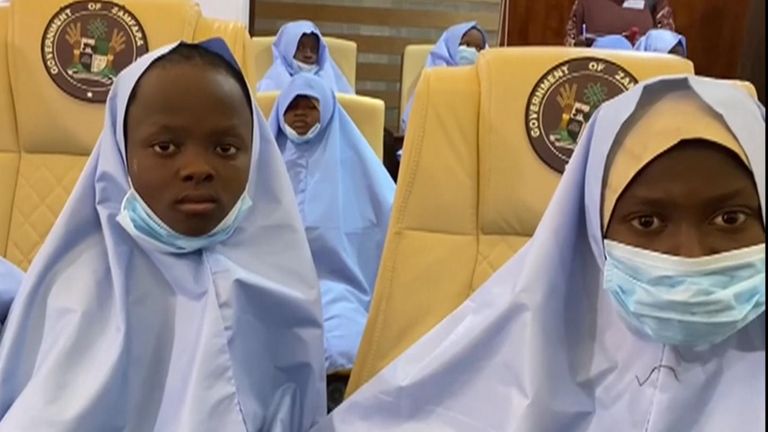
A group of girls who were abducted from a boarding school in Nigeria have been released and are "safe", reports say. Gunmen abducted 317 students from the Girls Science Secondary School in Jangebe town, Zamfara state, on Friday 26 Feb 21
Image: Some of the girls from Jangebe after their release

The worst incident this year occurred at the Government Girls Secondary School Jangebe in February, when 279 girls were abducted and later released.

On Saturday, 14 students were freed after being abducted last month from a university in neighbouring
Kaduna state.

In 2019, a British aid worker, Faye Mooney, was killed by kidnappers in the country.

Teachers have been forced to flee from state to state for protection, and many children have had to abandon their education amid frequent violent attacks in their communities.

Adblock test (Why?)


https://news.google.com/__i/rss/rd/articles/CBMidWh0dHBzOi8vbmV3cy5za3kuY29tL3N0b3J5L25pZ2VyaWEtYWJvdXQtMjAwLWNoaWxkcmVuLWFiZHVjdGVkLWFmdGVyLXNjaG9vbC1hbWJ1c2hlZC1ieS1ndW5tZW4tb24tbW90b3JiaWtlcy0xMjMyMTE2MNIBeWh0dHBzOi8vbmV3cy5za3kuY29tL3N0b3J5L2FtcC9uaWdlcmlhLWFib3V0LTIwMC1jaGlsZHJlbi1hYmR1Y3RlZC1hZnRlci1zY2hvb2wtYW1idXNoZWQtYnktZ3VubWVuLW9uLW1vdG9yYmlrZXMtMTIzMjExNjA?oc=5

2021-05-30 21:50:55Z
52781633060216