Matt Laubhan, chief meteorologist for local TV station WTVA, struggled to contain his emotions as he told the viewers that the town of Amory was going to take the direct hit from the huge twister. Amory has a population of just over 6,000.
Mr Laubhan told viewers that as much as they “trust him”, he wasn’t sure how the tornado would pan out.
"Oh man, north side of Amory, this is coming in," he said late Friday during the broadcast.
"Oh, man. Dear Jesus, please help them. Amen," he said as more detailed updates of the tornado’s movements came in.
One person was killed in Alabama and 25 in Mississippi as overnight tornadoes wove more than a 150-mile path of destruction through the states, touching down in many regions where mobile homes and other residential structures outnumber sturdier houses.
The twister flattened entire blocks, ripped a steeple off a church and toppled a municipal water tower. Even with recovery just starting, the National Weather Service warned of a risk of more severe weather.
Preliminary information based on estimates from storm reports and radar data indicate the Friday night tornado was on the ground for more than an hour and traversed at least 170 miles, according to National Weather Service meteorologist Lance Perrilloux with the NWS office in Jackson, Mississippi.
“That’s rare — very, very rare,” he said, attributing the long path to widespread atmospheric instability.
Tornadoes and severe winds continued to batter parts of the south during the weekend and thousands remained without power as the storm moved east.
Nearly 13,000 people remained without power in Georgia on Sunday morning, according to PowerOutage.us.
Mississippi governor Tate Reeves on Saturday declared a state of emergency after the storm system tore through Rolling Fork and Silver City before smashing into Winona, Amory and Alabama. The massive supercell storm also brought hail the size of golf balls.
Rolling Fork mayor Eldridge Walker said that his “city is gone” after buildings and homes were obliterated.
“How anybody survived is unknown by me,” said Rodney Porter, who lives 20 miles south of Rolling Fork.
When the storm hit Friday night, he immediately drove there to assist in any way he could. Porter arrived to find “total devastation” and said he smelled natural gas and heard people screaming for help in the dark.
“Houses are gone, houses stacked on top of houses with vehicles on top of that,” he told The Associated Press.
President Joe Biden on Sunday approved an emergency declaration for Mississippi. Mr Biden ordered federal aid to supplement state, tribal and local recovery efforts in the affected areas, a White House statement said.
The funding will be available to affected people in the counties of Carroll, Humphreys, Monroe, and Sharkey, it added.
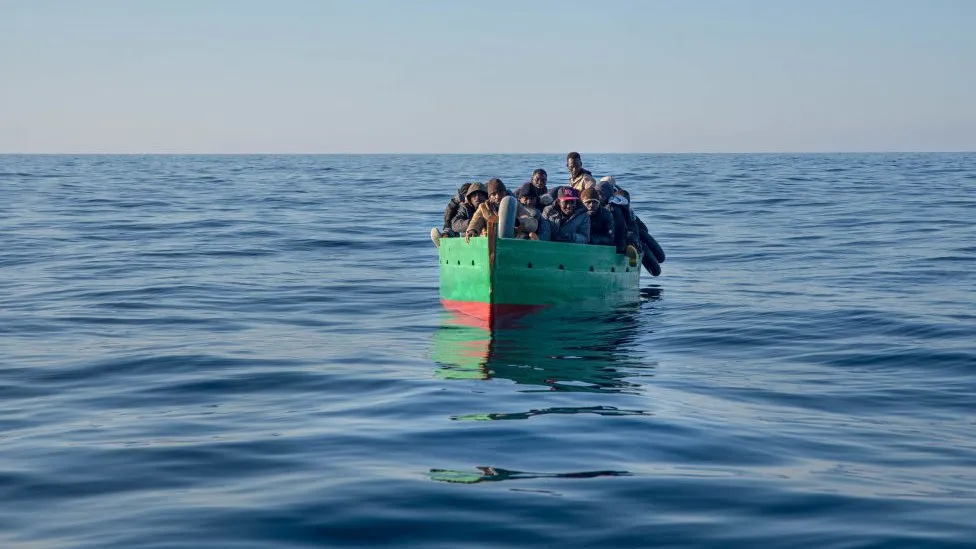
At least 29 migrants have died after at least two boats sank off Tunisia's coast within hours of each other, officials say.
The sub-Saharan migrants were trying to cross the Mediterranean to reach Italy.
It is the latest in a string of migrant boat capsizes off Tunisia's coast in the last few days, with five others sinking in the past four days.
This comes after Tunisia launched a campaign against undocumented African migrants.
Meanwhile, Italian officials on the island of Lampedusa say they are overwhelmed, after a record 2,500 migrants arrived in the last 24 hours.
The Italian far-right Prime Minister, Giorgia Meloni, has warned Europe risks seeing a huge wave of refugees arriving on its shores.
Tunisia has become a hub for migrants who wish to make it to Europe, with UN figures showing at least 12,000 migrants who landed on Italy's shores this year left from Tunisia. That figure was just 1,300 in the same time period last year.
However, the Tunisia coast guard say they are taking steps to stop the migrant crossings, having halted around 80 vessels headed for Europe in the past four days, according to the Reuters news agency. It also says it has detained more than 3,000 migrants, the same agency reports.
In a controversial speech last month, Tunisia's president accused sub-Saharan African migrants living in the country of causing a crime wave and described them as a demographic threat.
Kais Saied's comments were widely criticised by the African Union and denounced as "racist hate speech" by human rights groups.
These comments have left some sub-Saharan Africans in Tunisia living in fear, with some saying they have seen an increase in racist incidents.
This has led some countries, like Ivory Coast and Guinea, to repatriate their citizens due to an increased climate of intolerance in Tunisia.
Tunisia's economy is in a poor state, and is facing crisis after negotiations with the the International Monetary Fund (IMF) stalled.
The US Secretary of State Antony Blinken has also warned that Tunisia urgently needs to reach a bailout deal with the IMF.
Matt Laubhan, chief meteorologist for local TV station WTVA, struggled to contain his emotions as he told the viewers that the town of Amory was going to take the direct hit from the huge twister. Amory has a population of just over 6,000.
Mr Laubhan told viewers that as much as they “trust him”, he wasn’t sure how the tornado would pan out.
"Oh man, north side of Amory, this is coming in," he said late Friday during the broadcast.
"Oh, man. Dear Jesus, please help them. Amen," he said as more detailed updates of the tornado’s movements came in.
One person was killed in Alabama and 25 in Mississippi as overnight tornadoes wove more than a 150-mile path of destruction through the states, touching down in many regions where mobile homes and other residential structures outnumber sturdier houses.
The twister flattened entire blocks, ripped a steeple off a church and toppled a municipal water tower. Even with recovery just starting, the National Weather Service warned of a risk of more severe weather.
Preliminary information based on estimates from storm reports and radar data indicate the Friday night tornado was on the ground for more than an hour and traversed at least 170 miles, according to National Weather Service meteorologist Lance Perrilloux with the NWS office in Jackson, Mississippi.
“That’s rare — very, very rare,” he said, attributing the long path to widespread atmospheric instability.
Tornadoes and severe winds continued to batter parts of the south during the weekend and thousands remained without power as the storm moved east.
Nearly 13,000 people remained without power in Georgia on Sunday morning, according to PowerOutage.us.
Mississippi governor Tate Reeves on Saturday declared a state of emergency after the storm system tore through Rolling Fork and Silver City before smashing into Winona, Amory and Alabama. The massive supercell storm also brought hail the size of golf balls.
Rolling Fork mayor Eldridge Walker said that his “city is gone” after buildings and homes were obliterated.
“How anybody survived is unknown by me,” said Rodney Porter, who lives 20 miles south of Rolling Fork.
When the storm hit Friday night, he immediately drove there to assist in any way he could. Porter arrived to find “total devastation” and said he smelled natural gas and heard people screaming for help in the dark.
“Houses are gone, houses stacked on top of houses with vehicles on top of that,” he told The Associated Press.
President Joe Biden on Sunday approved an emergency declaration for Mississippi. Mr Biden ordered federal aid to supplement state, tribal and local recovery efforts in the affected areas, a White House statement said.
The funding will be available to affected people in the counties of Carroll, Humphreys, Monroe, and Sharkey, it added.
Kyiv on Sunday said Russia was holding Minsk as a “nuclear hostage” after Russian President Vladimir Putin announced the deployment of tactical nuclear weapons to ally Belarus, Agence France-Presse reports.
“The Kremlin took Belarus as a nuclear hostage,” the secretary of Ukraine’s National Security and Defence Council, Oleksiy Danilov, wrote on Twitter, adding that the move was “a step towards the internal destabilisation of the country”.
Here are some images coming to us over the wires.
Here’s some more on football.
Later on Sunday, Ukraine take on England at the UK’s Wembley Stadium in a qualifying match for the men’s Euro 2024 football competition.
UK ministers offered 1,000 free tickets to Ukrainians and their sponsors to attend the match at Wembley.
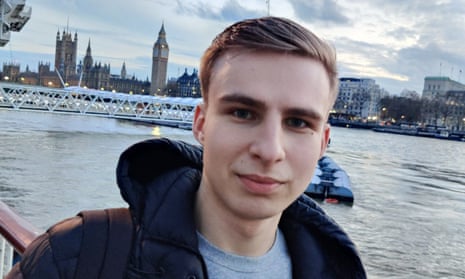
Denys Dreyzer, 18, from Kherson, fled Ukraine in May 2022 and came to the UK under the Homes for Ukraine scheme.
He and his family have since moved out from their hosts' home.
Dreyzer, who works as caretaker for the Ukrainian Community Centre and is studying at the University of Bolton, will attend the game with his mother and sister, who he lives with in Bradford. His father is in Kyiv.
Discussing the match, he told PA News:
I hope it will be amazing, because it’s like new fresh air to our community to watch our guys fighting to get to the Euros.
We hope this game our guys will show what we can do. And also it will be good present for our military, because they are every day fighting for our freedom.
I hope they will watch this game and this game will will make them happy.
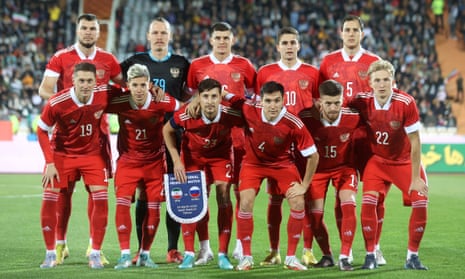
The Azadi Stadium in Tehran can hold up to 78,000 at capacity. As Anton Miranchuk of Lokomotiv Moscow kicked off under a giant portrait of the former supreme leader Ayatollah Khomeini on Thursday night, let’s generously say it wasn’t quite full. Still, what crowd there was made a pretty decent noise.
There were even a few hundred travelling fans, who were rewarded when Miranchuk scored for Russia from the penalty spot. Early in the second half the Porto striker Mehdi Taremi equalised for Iran, and although the later stages disintegrated into a procession of substitutions, the visitors were ultimately a little fortunate to escape with a 1-1 draw.
Honours even on the pitch, then, which felt like a diplomatically fitting result. Over the past year, as the west has begun to close ranks, these two pariah states have found themselves locked in a pragmatic but increasingly enthusiastic embrace.
Russian money has been pouring into Iranian mining and infrastructure projects, to the point where it is now Iran’s largest source of foreign investment. Iran has invited Russian businesspeople to Tehran to share advice on circumventing western sanctions. The two countries have linked their banking systems and embarked on joint naval drills. And last month the Russian and Iranian sports ministers signed a “memorandum of mutual understanding”, vowing to strengthen their sporting ties.
On Sunday evening, Ukraine’s footballers will step out at Wembley Stadium to a vivid fanfare: a sea of flags and bold gestures, an outpouring of affection and solidarity that has greeted them pretty much everywhere they have travelled in the last year. At exactly the same time, in St Petersburg’s Krestovsky Stadium, Russia will play Iraq in their first national team game on home soil since the start of last year’s war.
Good luck finding the game on television or tracking down a match report on the Fifa website. But seamlessly, almost imperceptibly, Russia has returned to the international football treadmill, and nobody seems overly perturbed by it.
Even Ukraine, who called for Iran to be thrown out of last year’s World Cup for its role in supplying drones to the Russian war effort, has in this instance opted for apathy over outrage. “Those countries who play Russia, an aggressor, support Russian aggression and what Russia is doing to Ukraine,” said Ukraine’s caretaker manager, Ruslan Rotan, last week. “We don’t have to think about those countries, we don’t have to pay attention to them. They are not worthy. The bottom line is, forget Russia.”
Russia and China are not creating a military alliance, the Russian president, Vladimir Putin, said in a televised interview broadcast on Sunday, stating that the two countries’ military cooperation was transparent, news agencies reported.
Putin also said western powers were building a new “axis”, bearing some resemblance to Germany and Japan’s second world war alliance.
Interfax quoted Putin as saying:
We are not creating any military alliance with China.
Yes, we have cooperation in the sphere of military-technical interaction. We are not hiding this.
Everything is transparent, there is nothing secret.
Kyiv on Sunday said Russia was holding Minsk as a “nuclear hostage” after Russian President Vladimir Putin announced the deployment of tactical nuclear weapons to ally Belarus, Agence France-Presse reports.
“The Kremlin took Belarus as a nuclear hostage,” the secretary of Ukraine’s National Security and Defence Council, Oleksiy Danilov, wrote on Twitter, adding that the move was “a step towards the internal destabilisation of the country”.
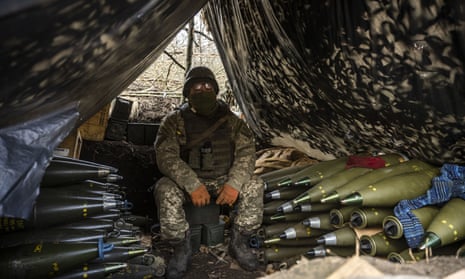
The UK Ministry of Defence says that since the start of March 2023 Russia is likely to have launched at least 71 Iranian-designed Shahed series one-way attack uncrewed aerial vehicle (OWA-UAVS) against targets across Ukraine.
It says Russia is likely launching Shaheds from two axes: from Russia’s Krasnodar Krai in the east and from Bryansk Oblast in the north-east.
Ukraine will no longer resort to “dangerous” monetary financing to fund the war against Russia, its central bank governor, Andriy Pyshnyi, told the Financial Times in an interview published on Sunday.
The head of the National Bank of Ukraine said that it had “created huge risks for macro-financial stability” when the bank was last year forced to print billions of hryvnia to plug a budget shortfall, adding that an “open conflict” with the government over the issue had been resolved.
“It was a quick remedy, but very dangerous,” Pyshnyi told the newspaper.
Reactions continue on Vladimir Putin’s announcement Russia will station tactical nuclear weapons in Belarus.
“It’s a very significant move,” Nikolai Sokol, a senior fellow at the Vienna Center for Disarmament and Non-Proliferation, told Reuters.
“Russia had always been very proud that it had no nuclear weapons outside its territory. So, now, yes, they are changing that and it’s a big change.”
Putin did not specify when the weapons would be transferred to Belarus, which has borders with three Nato members – Poland, Lithuania and Latvia. He said Russia would complete the construction of a storage facility there by 1 July.
“This is part of Putin’s game to try to intimidate Nato … because there is no military utility from doing this in Belarus as Russia has so many of these weapons and forces inside Russia,” said Hans Kristensen, director of the nuclear information project at the Federation of American Scientists.
The International Campaign to Abolish Nuclear Weapons called Putin’s announcement on an extremely dangerous escalation.
“In the context of the war in Ukraine, the likelihood of miscalculation or misinterpretation is extremely high. Sharing nuclear weapons makes the situation much worse and risks catastrophic humanitarian consequences,” it said on Twitter.
Hello and welcome back to our live coverage of the war in Ukraine. This is Christine Kearney to bring you up to speed with the latest developments.
A senior US administration official says there are no signs Moscow plans to use its nuclear weapons.
Putin likened his plans to the US stationing its weapons in Europe and said that Russia would not be transferring control to Belarus. But this could be the first time since the mid-1990s that Russia were to base such weapons outside the country.
Hawkish Russian politicians and commentators have long-speculated about nuclear strikes, saying Russia has the right to defend itself with nuclear weapons if it is pushed beyond its limits.
“Tactical” nuclear weapons refer to those used for specific gains on a battlefield rather than those with the capacity to wipe out cities. It is unclear how many such weapons Russia has, given it is an area still shrouded in cold war secrecy.
Experts say the development is significant, since Russia had until now been proud that unlike the US, it did not deploy nuclear weapons outside its borders.
The senior US administration official noted that Russia and Belarus had been speaking about the transfer of nuclear weapons for some time.
“We have seen reports of Russia’s announcement and will continue to monitor this situation,” the US defence department’s press office said in a written statement.
“We have not seen any reason to adjust our own strategic nuclear posture nor any indications Russia is preparing to use a nuclear weapon. We remain committed to the collective defence of the Nato alliance.”
In other key developments shortly after 9am in the Ukrainian capital, Kyiv:
Ukraine’s deputy minister of defence Hanna Maliar went on Facebook to urge Ukrainians to not openly discuss details about the country’s upcoming offensive. “On live broadcasts, don’t ask experts questions [in the vein of] ‘how is the counter-offensive going?’, don’t write blogs or posts on this topic, and don’t discuss military plans of our army publicly at all. We have one strategic plan – to liberate all our territories. And as for the details – that’s simply a military secret,” Maliar wrote.
The head of the UN’s International Atomic Energy Agency will visit Ukraine’s Zaporizhzhia nuclear power plant next week to assess the serious security situation there, the IAEA said. Rafael Grossi said in a statement that the nuclear safety and security dangers at the Russian-held plant were “all too obvious”.
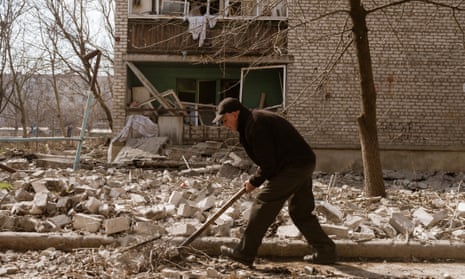
Russia fired on a humanitarian aid delivery point in the city of Kherson on Saturday, injuring two civilians, according to the Ukrainian military. Oleksandr Prokudin, head of the Kherson regional military administration, said: “Russian occupiers continue shelling the places where civilians are provided with aid.”
The top commander of Ukraine’s military has said that his forces are pushing back against Russian troops in the long and grinding battle for the town of Bakhmut. Separately, Britain’s defence ministry said the months-long Russian assault on the city had stalled, mainly as a result of heavy troop losses. British military intelligence also said Russia appeared to be moving to a defensive strategy in eastern Ukraine, Associated Press reported.
Russian oil company Gazprom reduced gas exports to the EU through Ukraine by 15%, the Kyiv Independent reports. On 24 March, Gazprom recorded a gas transit flow of 42.5m cubic metres. A day later, the volume decreased to 36.2m cubic metres.
The US president, Joe Biden, and the Canadian prime minister, Justin Trudeau, have displayed a united front against authoritarian regimes as Biden visited the Canadian capital days after the leaders of China and Russia held a Moscow summit. Reuters reported that images of Biden and Trudeau standing side by side in Ottawa on Friday announcing agreements including on semiconductors and migration represented a counterpoint to the scene in Moscow days ago.
The Turkish president, Recep Tayyip Erdoğan, spoke by phone with Putin and thanked him for his “positive attitude” in extending the Black Sea grain deal, the Turkish presidency said on Saturday. It said the two leaders discussed steps to improve Turkish-Russian relations, and developments regarding the war in Ukraine, and that Erdoğan expressed the importance of ending the conflict through negotiations as soon as possible, Reuters reported.
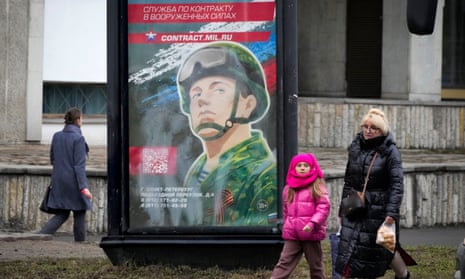
More than 5,000 former criminals have been pardoned after finishing their contracts to fight in Russia’s Wagner mercenary group against Ukraine, the founder of Wagner, Yevgeny Prigozhin, said on Saturday. The Wagner group, originally staffed by battle-hardened veterans of the Russian armed forces, took on a much more prominent role in the Ukraine war after the Russian army suffered a series of humiliating defeats last year, Reuters reported.
The United Nations has said it is “deeply concerned” by what it said were summary executions of prisoners of war by both Russian and Ukrainian forces on the battlefield. A report from the UN’s office of the high commissioner for human rights said its monitors had documented dozens of the executions by both sides, that the actual number was likely higher and that they “may constitute war crimes”.
Police in Russia have placed a former speechwriter for Vladimir Putin on a wanted list of suspects, the latest step in a sweeping crackdown on dissent. The Associated Press reports that Abbas Gallyamov wrote speeches for Putin during the Russian leader’s 2008-12 stint as prime minister. Gallyamov later became an outspoken political consultant and analyst who was frequently quoted by Russian and foreign media. He has lived abroad in recent years.
Russia’s parliament speaker has proposed banning the activities of the international criminal court (ICC) after the court issued an arrest warrant for the Russian president, Vladimir Putin, accusing him of war crimes. Vyacheslav Volodin, an ally of Putin’s, said on Saturday that Russian legislation should be amended to prohibit any activity of the ICC in Russia and to punish any who gave “assistance and support” to the court.
Donald Trump has described the numerous investigations into his behaviour as "something straight out of the Stalinist Russia horror show".
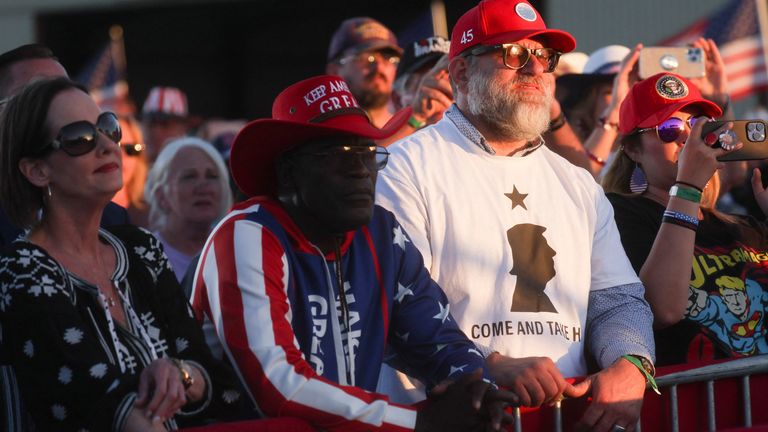
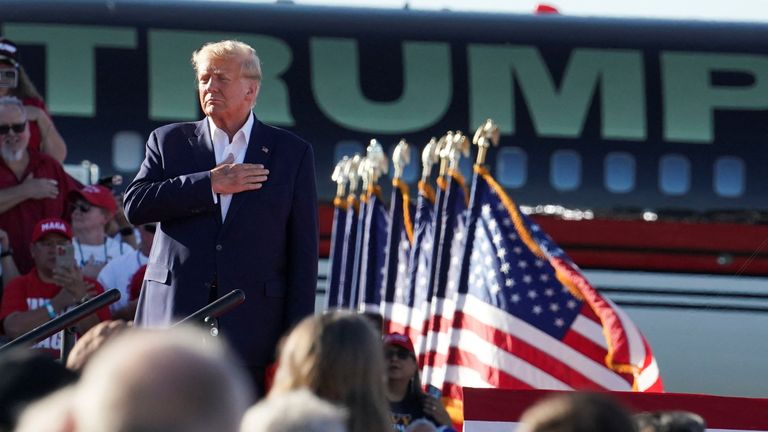
Mr Trump was speaking in Waco, Texas, at his first election rally on Saturday as he campaigns for the Republican presidential nomination.
He has a number of legal threats hanging over him, including allegations of campaign finance violations and of mishandling top-secret documents.
He said: "From the beginning it has been one witch-hunt and phony investigation after another."
Mr Trump's visit to Waco came 30 years after a raid by federal agents on the Branch Davidians religious cult.
Eighty-six people died that day, including four law enforcement officers.
A spokesperson for the Trump campaign said Waco was chosen because it sits between several major population centres and has the infrastructure to host a large event.
More on Donald Trump
Related Topics:
But critics would say that the choice was a nod to Mr Trump's far-right supporters, many of whom see the raid as an example of government over-reach.
Mr Trump's speech had many of his usual themes - he blamed immigrants for a number of the country's problems, insisted he could return the US economy to its previous levels, promised to save his country from "World War Three", and repeated his false claims that his election loss in 2020 was due to a fraud orchestrated by the Democrats.
Advertisement
He had opened the rally by playing a song - Justice For All - featuring a choir of men imprisoned for their role in the 6 January 2021 insurrection at the US Capitol singing the national anthem and a recording of himself reciting the Pledge Of Allegiance.
Footage from the insurrection was also shown on big screens.
Mr Trump told the crowd that his enemies "are desperate to stop us", and "our opponents have done everything they can to crush our spirit and to break our will".
"But they failed," he added.
"They've only made us stronger.
"And 2024 is the final battle.
"It's going to be the big one.
"You put me back in the White House, their reign will be over and America will be a free nation once again."
The 76-year-old claimed that some American politicians are a bigger threat to the US than China or Russia, and said that "demonic forces" are trying to destroy the country and that it risks falling into a "lawless abyss".
"Either the deep state destroys America or we destroy the deep state," he said.
Mr Trump faces tough competition for his party's nomination, with a potential challenge from Florida Governor Ron DeSantis.
On Saturday, he tried to play down the chances of his possible rival, saying: "I'm not a big fan", and "Florida has been tremendously successful for many years, long before this guy [DeSantis] became governor".
Mr Trump is being investigated by prosecutors in Manhattan for campaign finance violations following his alleged payment of hush money to adult film star Stormy Daniels before the 2016 election.
Last week he warned of possible "death and destruction" if he is indicted on the matter.
A special counsel is also investigating allegations that he hoarded top-secret documents and that he was behind a plot seeking to overturn the 2020 election.
Kyiv on Sunday said Russia was holding Minsk as a “nuclear hostage” after Russian President Vladimir Putin announced the deployment of tactical nuclear weapons to ally Belarus, Agence France-Presse reports.
“The Kremlin took Belarus as a nuclear hostage,” the secretary of Ukraine’s National Security and Defence Council, Oleksiy Danilov, wrote on Twitter, adding that the move was “a step towards the internal destabilisation of the country”.
The Azadi Stadium in Tehran can hold up to 78,000 at capacity. As Anton Miranchuk of Lokomotiv Moscow kicked off under a giant portrait of the former supreme leader Ayatollah Khomeini on Thursday night, let’s generously say it wasn’t quite full. Still, what crowd there was made a pretty decent noise.
There were even a few hundred travelling fans, who were rewarded when Miranchuk scored for Russia from the penalty spot. Early in the second half the Porto striker Mehdi Taremi equalised for Iran, and although the later stages disintegrated into a procession of substitutions, the visitors were ultimately a little fortunate to escape with a 1-1 draw.
Honours even on the pitch, then, which felt like a diplomatically fitting result. Over the past year, as the west has begun to close ranks, these two pariah states have found themselves locked in a pragmatic but increasingly enthusiastic embrace.
Russian money has been pouring into Iranian mining and infrastructure projects, to the point where it is now Iran’s largest source of foreign investment. Iran has invited Russian businesspeople to Tehran to share advice on circumventing western sanctions. The two countries have linked their banking systems and embarked on joint naval drills. And last month the Russian and Iranian sports ministers signed a “memorandum of mutual understanding”, vowing to strengthen their sporting ties.
On Sunday evening, Ukraine’s footballers will step out at Wembley Stadium to a vivid fanfare: a sea of flags and bold gestures, an outpouring of affection and solidarity that has greeted them pretty much everywhere they have travelled in the last year. At exactly the same time, in St Petersburg’s Krestovsky Stadium, Russia will play Iraq in their first national team game on home soil since the start of last year’s war.
Good luck finding the game on television or tracking down a match report on the Fifa website. But seamlessly, almost imperceptibly, Russia has returned to the international football treadmill, and nobody seems overly perturbed by it.
Even Ukraine, who called for Iran to be thrown out of last year’s World Cup for its role in supplying drones to the Russian war effort, has in this instance opted for apathy over outrage. “Those countries who play Russia, an aggressor, support Russian aggression and what Russia is doing to Ukraine,” said Ukraine’s caretaker manager, Ruslan Rotan, last week. “We don’t have to think about those countries, we don’t have to pay attention to them. They are not worthy. The bottom line is, forget Russia.”
Russia and China are not creating a military alliance, the Russian president, Vladimir Putin, said in a televised interview broadcast on Sunday, stating that the two countries’ military cooperation was transparent, news agencies reported.
Putin also said western powers were building a new “axis”, bearing some resemblance to Germany and Japan’s second world war alliance.
Interfax quoted Putin as saying:
We are not creating any military alliance with China.
Yes, we have cooperation in the sphere of military-technical interaction. We are not hiding this.
Everything is transparent, there is nothing secret.
Kyiv on Sunday said Russia was holding Minsk as a “nuclear hostage” after Russian President Vladimir Putin announced the deployment of tactical nuclear weapons to ally Belarus, Agence France-Presse reports.
“The Kremlin took Belarus as a nuclear hostage,” the secretary of Ukraine’s National Security and Defence Council, Oleksiy Danilov, wrote on Twitter, adding that the move was “a step towards the internal destabilisation of the country”.
The UK Ministry of Defence says that since the start of March 2023 Russia is likely to have launched at least 71 Iranian-designed Shahed series one-way attack uncrewed aerial vehicle (OWA-UAVS) against targets across Ukraine.
It says Russia is likely launching Shaheds from two axes: from Russia’s Krasnodar Krai in the east and from Bryansk Oblast in the north-east.
Ukraine will no longer resort to “dangerous” monetary financing to fund the war against Russia, its central bank governor, Andriy Pyshnyi, told the Financial Times in an interview published on Sunday.
The head of the National Bank of Ukraine said that it had “created huge risks for macro-financial stability” when the bank was last year forced to print billions of hryvnia to plug a budget shortfall, adding that an “open conflict” with the government over the issue had been resolved.
“It was a quick remedy, but very dangerous,” Pyshnyi told the newspaper.
Reactions continue on Vladimir Putin’s announcement Russia will station tactical nuclear weapons in Belarus.
“It’s a very significant move,” Nikolai Sokol, a senior fellow at the Vienna Center for Disarmament and Non-Proliferation, told Reuters.
“Russia had always been very proud that it had no nuclear weapons outside its territory. So, now, yes, they are changing that and it’s a big change.”
Putin did not specify when the weapons would be transferred to Belarus, which has borders with three Nato members – Poland, Lithuania and Latvia. He said Russia would complete the construction of a storage facility there by 1 July.
“This is part of Putin’s game to try to intimidate Nato … because there is no military utility from doing this in Belarus as Russia has so many of these weapons and forces inside Russia,” said Hans Kristensen, director of the nuclear information project at the Federation of American Scientists.
The International Campaign to Abolish Nuclear Weapons called Putin’s announcement on an extremely dangerous escalation.
“In the context of the war in Ukraine, the likelihood of miscalculation or misinterpretation is extremely high. Sharing nuclear weapons makes the situation much worse and risks catastrophic humanitarian consequences,” it said on Twitter.
Hello and welcome back to our live coverage of the war in Ukraine. This is Christine Kearney to bring you up to speed with the latest developments.
A senior US administration official says there are no signs Moscow plans to use its nuclear weapons.
Putin likened his plans to the US stationing its weapons in Europe and said that Russia would not be transferring control to Belarus. But this could be the first time since the mid-1990s that Russia were to base such weapons outside the country.
Hawkish Russian politicians and commentators have long-speculated about nuclear strikes, saying Russia has the right to defend itself with nuclear weapons if it is pushed beyond its limits.
“Tactical” nuclear weapons refer to those used for specific gains on a battlefield rather than those with the capacity to wipe out cities. It is unclear how many such weapons Russia has, given it is an area still shrouded in cold war secrecy.
Experts say the development is significant, since Russia had until now been proud that unlike the US, it did not deploy nuclear weapons outside its borders.
The senior US administration official noted that Russia and Belarus had been speaking about the transfer of nuclear weapons for some time.
“We have seen reports of Russia’s announcement and will continue to monitor this situation,” the US defence department’s press office said in a written statement.
“We have not seen any reason to adjust our own strategic nuclear posture nor any indications Russia is preparing to use a nuclear weapon. We remain committed to the collective defence of the Nato alliance.”
In other key developments shortly after 9am in the Ukrainian capital, Kyiv:
Ukraine’s deputy minister of defence Hanna Maliar went on Facebook to urge Ukrainians to not openly discuss details about the country’s upcoming offensive. “On live broadcasts, don’t ask experts questions [in the vein of] ‘how is the counter-offensive going?’, don’t write blogs or posts on this topic, and don’t discuss military plans of our army publicly at all. We have one strategic plan – to liberate all our territories. And as for the details – that’s simply a military secret,” Maliar wrote.
The head of the UN’s International Atomic Energy Agency will visit Ukraine’s Zaporizhzhia nuclear power plant next week to assess the serious security situation there, the IAEA said. Rafael Grossi said in a statement that the nuclear safety and security dangers at the Russian-held plant were “all too obvious”.
Russia fired on a humanitarian aid delivery point in the city of Kherson on Saturday, injuring two civilians, according to the Ukrainian military. Oleksandr Prokudin, head of the Kherson regional military administration, said: “Russian occupiers continue shelling the places where civilians are provided with aid.”
The top commander of Ukraine’s military has said that his forces are pushing back against Russian troops in the long and grinding battle for the town of Bakhmut. Separately, Britain’s defence ministry said the months-long Russian assault on the city had stalled, mainly as a result of heavy troop losses. British military intelligence also said Russia appeared to be moving to a defensive strategy in eastern Ukraine, Associated Press reported.
Russian oil company Gazprom reduced gas exports to the EU through Ukraine by 15%, the Kyiv Independent reports. On 24 March, Gazprom recorded a gas transit flow of 42.5m cubic metres. A day later, the volume decreased to 36.2m cubic metres.
The US president, Joe Biden, and the Canadian prime minister, Justin Trudeau, have displayed a united front against authoritarian regimes as Biden visited the Canadian capital days after the leaders of China and Russia held a Moscow summit. Reuters reported that images of Biden and Trudeau standing side by side in Ottawa on Friday announcing agreements including on semiconductors and migration represented a counterpoint to the scene in Moscow days ago.
The Turkish president, Recep Tayyip Erdoğan, spoke by phone with Putin and thanked him for his “positive attitude” in extending the Black Sea grain deal, the Turkish presidency said on Saturday. It said the two leaders discussed steps to improve Turkish-Russian relations, and developments regarding the war in Ukraine, and that Erdoğan expressed the importance of ending the conflict through negotiations as soon as possible, Reuters reported.
More than 5,000 former criminals have been pardoned after finishing their contracts to fight in Russia’s Wagner mercenary group against Ukraine, the founder of Wagner, Yevgeny Prigozhin, said on Saturday. The Wagner group, originally staffed by battle-hardened veterans of the Russian armed forces, took on a much more prominent role in the Ukraine war after the Russian army suffered a series of humiliating defeats last year, Reuters reported.
The United Nations has said it is “deeply concerned” by what it said were summary executions of prisoners of war by both Russian and Ukrainian forces on the battlefield. A report from the UN’s office of the high commissioner for human rights said its monitors had documented dozens of the executions by both sides, that the actual number was likely higher and that they “may constitute war crimes”.
Police in Russia have placed a former speechwriter for Vladimir Putin on a wanted list of suspects, the latest step in a sweeping crackdown on dissent. The Associated Press reports that Abbas Gallyamov wrote speeches for Putin during the Russian leader’s 2008-12 stint as prime minister. Gallyamov later became an outspoken political consultant and analyst who was frequently quoted by Russian and foreign media. He has lived abroad in recent years.
Russia’s parliament speaker has proposed banning the activities of the international criminal court (ICC) after the court issued an arrest warrant for the Russian president, Vladimir Putin, accusing him of war crimes. Vyacheslav Volodin, an ally of Putin’s, said on Saturday that Russian legislation should be amended to prohibit any activity of the ICC in Russia and to punish any who gave “assistance and support” to the court.
To play this video you need to enable JavaScript in your browser.
By Sophie Long in Rolling Fork, Mississippi and Antoinette Radford in London
BBC News
At least 26 people have died in Mississippi and Alabama after a tornado tore through the southern US states.
Search and rescue efforts are continuing, and the Mississippi state government has declared a state of emergency.
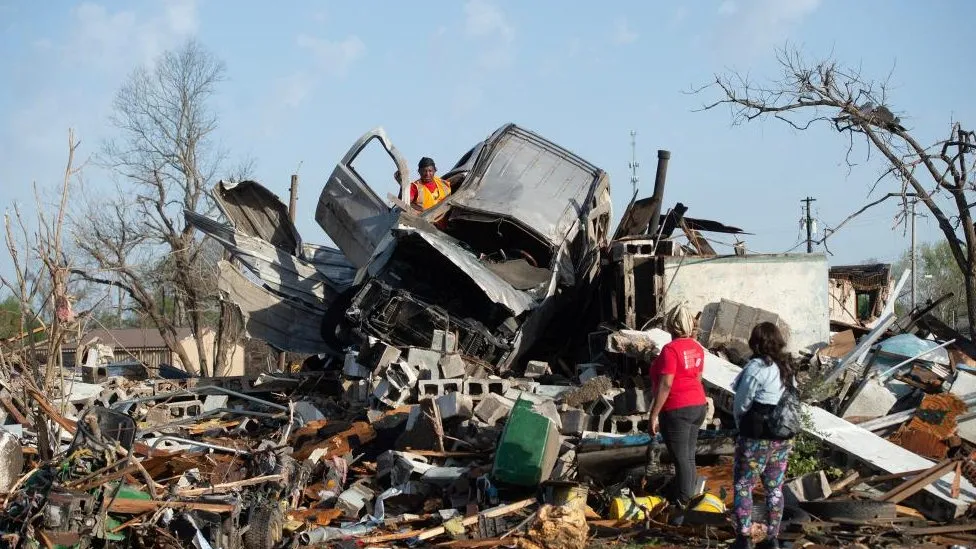
In Rolling Fork, crushed cars, bricks and glass litter the streets - the town has been almost entirely wiped out.
One resident told the BBC he was lucky to survive after seeking shelter in his bath tub.
Approaching the neighbourhood in western Sharkey County, there is little indication of anything unusual.
The lush farmland that surrounds it is completely untouched, the trees aren't even bent out of shape by wind.
Then, suddenly, you see the houses that were in the tornado's path.
They have been totally obliterated.
In this rural town of only 2,000 people, where one fifth of residents live below the poverty line, dozens of buildings have been flattened by the fury of the tornado.
Homes where family and friends had gathered less than 24 hours before, ready for the weekend, have been reduced to rubble.
Timber frames have been snapped into pieces. There are upturned washing machines, but it is impossible to identify anything that might have been a kitchen.
Amongst the rubble, there are vehicles that have been tossed around. There is the occasional children's toy and other signs of the lives that were lived here just hours earlier.
Reuters
The tornado hit in the middle of the night - people had been sleeping and had not heard the alerts. For many the first indication that something terrible was happening was the noise.
Francisco McKnight told the BBC it was a miracle that he is alive. The only warning he had was the sound, he said - he had never heard anything like the noise of the wind on Friday night and never wants to again.
He took one look outside and then ran into his bathroom and got into the bath tub. He said that was what saved him.
The only part of his home that is still standing are parts of two of the bathroom walls.
The tornado lasted just five to 10 minutes he said, and he sat in the tub as the rest of his home was ripped away. For now, he staying in one of the shelters that have been set up in the area.
He does not know what he will do next, but he says somehow he will rebuild his life.
Mississippi state governor Tate Reeves visited Silver City and Winona on Saturday to meet affected residents who had been hit by the tornado's fury.
Sharing an update on Twitter, Mr Reeves described the situation as a "tragedy", writing: "We are blessed with brave, capable responders and loving neighbours. Please continue to pray."
Mr Reeves requested an expedited disaster declaration for the region and said: "We're going to fight like hell to make sure that we get as many resources to this area as possible."
The search and rescue efforts will continue in Mississippi as more storms are predicted to hit parts of Alabama and Georgia early on Sunday and potentially bring large hail.
US President Joe Biden also offered his support for the affected region. He described the images coming out of Mississippi as "heartbreaking".
On Sunday, the White House stated that President Biden ordered federal aid to support local recovery efforts in areas affected by the tornadoes, including grants for temporary housing, home repairs and low-cost loans to cover uninsured property losses.
This video can not be played
To play this video you need to enable JavaScript in your browser.
Are you in any of the areas affected by the tornado? If it is safe to do so, share your experiences by emailing haveyoursay@bbc.co.uk.
Please include a contact number if you are willing to speak to a BBC journalist. You can also get in touch in the following ways:
If you are reading this page and can't see the form you will need to visit the mobile version of the BBC website to submit your question or comment or you can email us at HaveYourSay@bbc.co.uk. Please include your name, age and location with any submission.