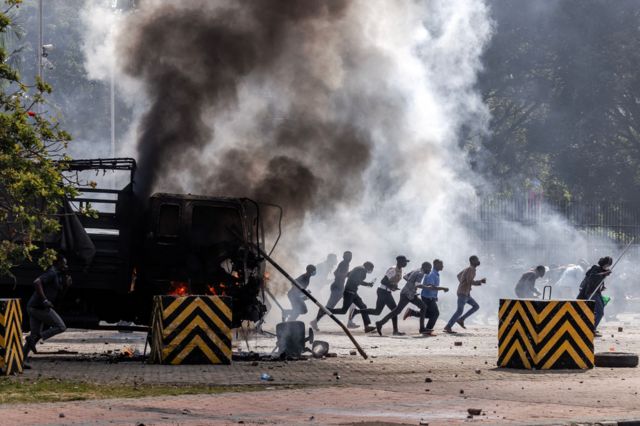
A group of ambassadors and high commissioners for countries including Britain, Canada, Denmark, Germany, the US and the Netherlands have issued a statement expressing "concern" at the violence ensuing at the protests.
"We are especially shocked by the scenes witnessed outside the Kenyan Parliament," the British High Commission posted on Facebook.
"We regret the tragic loss of life and injuries sustained including the use of live fire," they said.
The group says it is also "deeply concerned" by "allegations of abductions of protesters", and is calling for "restraint on all sides".
"All actors have the responsibility to respect, uphold, promote and uphold the rule of law, particularly by ensuring a proportionate security response".
Other signatories include the embassy of Finland, Estonia, Norway, Sweden, Romania and Belgium.
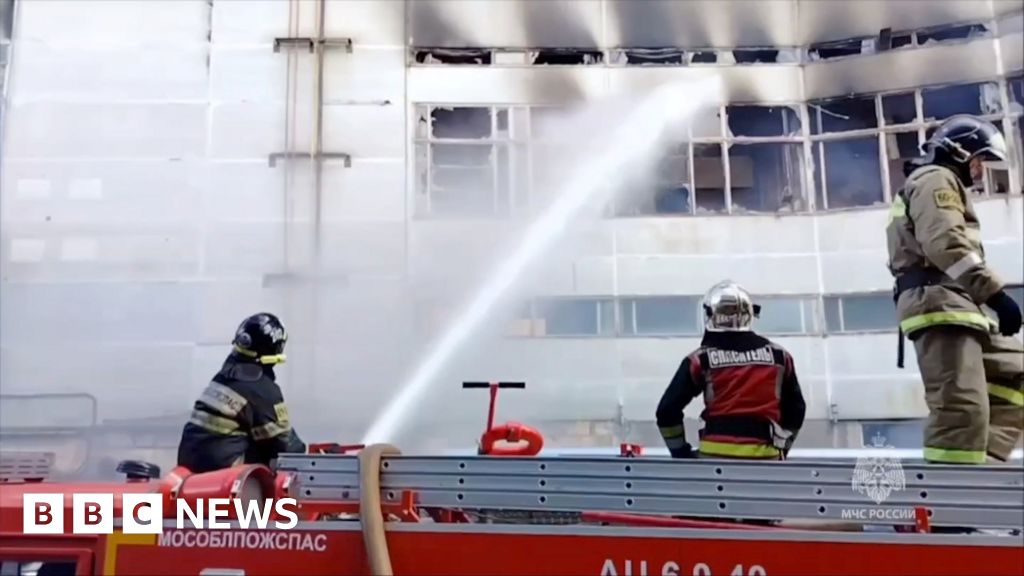
Firefighters battle deadly fire in Moscow office building
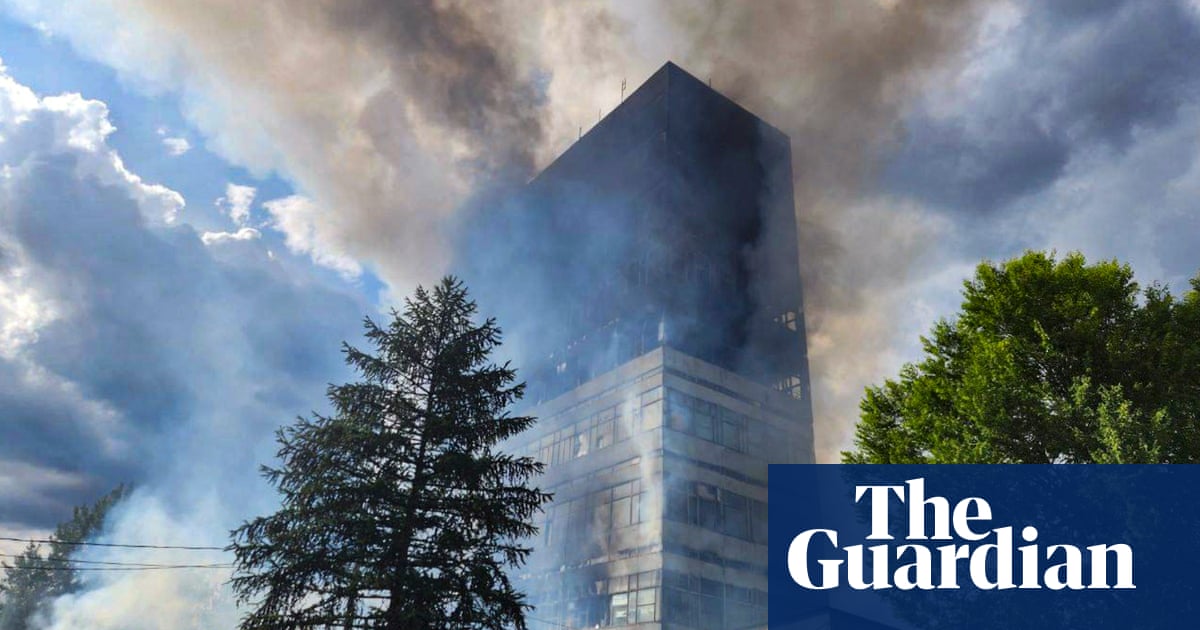
A deadly fire has broken out at a building on the territory of a former electronics research institute in Fryazino, near Moscow, though there are conflicting reports in Russian media over whether the structure has links to the defence industry.
At least eight people have died in the fire, which reportedly covered an area of at least 4,500 square metres.
Over 130 specialists and two helicopters were working to fight the fire, Russia's Emergency Situations Ministry has said.
Officials told Russian media one person was rescued from the blaze in the eight-story building.
At least eight people have died in a fire in an office building near Moscow, including two who jumped from the building to escape the flames.
Video taken in the town of Fryazino on Monday showed smoke and flames billowing out of at least three of the building’s top floors and a group of four people huddled around a broken window trying to escape.
“Two men jumped out of the window while trying to escape. Unfortunately, they died. The fate of the two women who were on the eighth floor is being clarified,” the Moscow regional governor, Andrei Vorobyov, said.
About 30 companies rent space in the office block, two of which had employees working there at the time of the fire, Vorobyov said. “There were also oxygen cylinders in the building, which triggered explosions. This led to the collapse of the floor slabs,” he added. The companies renting offices in the building include the Platan Research Institute, which produces electronics.
The Platan Research Institute is among several Russian companies sanctioned by the US Treasury for meddling in foreign elections, carrying out malicious cyber operations and undermining security abroad. The Treasury listing said the Platan Research Institute is based at the same address as the building that caught fire.
Russian newspaper Kommersant said the Institute develops equipment used by Russia’s military, including in fighter jets, bombers and helicopters, as well as in missiles, “all types of nuclear submarine missile carriers’, long-range radar and anti-aircraft missile systems.
Ruselectronics, the Platan Research Institute’s parent company, denied that the company was affected by Monday’s blaze. In a statement published by Tass, state-owned Ruselectronics insisted that the building had passed to private ownership in the 1990s and that the institute was no longer a tenant.
State news agency Tass said on Monday that the fire was caused by a malfunctioning electrical system.
The blaze spread to about 5,000 sq metres before being contained, according to emergency services.
Deadly fires are common in Russia, which has for years suffered from lax safety standards and struggled to modernise older buildings with alarms and firefighting equipment.
A criminal case has been opened and investigators are establishing the circumstances of the fire, the governor said.
For free real time breaking news alerts sent straight to your inbox sign up to our breaking news emails
Sign up to our free breaking news emails
Gunmen opened fire at a synagogue, an Orthodox church, and a police post in Russia’s North Caucasus region of Dagestan, killing at least 15 police officers and a priest in what seemed to be coordinated attacks on several places of worship in Russia’s southernmost province of Dagestan.
There was no immediate claim of responsibility for the attacks in the volatile North Caucasus region, according to the region’s interior ministry.
“This is a day of tragedy for Dagestan and the whole country,” Sergei Melikov, governor of the Dagestan region, said in a video published early on Monday on the Telegram messaging app.
Mr Melikov also said that at least six “militants” were killed following the attacks.
The interior ministry, quoted by Russian news agencies, said four gunmen had been shot dead as the incidents unfolded. A local official said another had been killed during a shootout at a church in Dagestan's capital of Makhachkala, where an Orthodox priest was also killed.
The reports said one officer was killed when shots were fired at a synagogue and a church in Derbent, home to an ancient Jewish community in the South Caucasus and a Unesco world heritage site.
“Unidentified people fired at a synagogue and a church with automatic weapons,” the interior ministry said. “One police officer was killed and one injured.”
The synagogue was on fire after the attack, Russian news agencies said.
Conflicting reports suggested that the attackers then fled in a car, although an unofficial channel on the Telegram messaging app, Mash, said gunmen were barricaded in a building in Derbent.
On Monday, Dagestan began three days of mourning for the dead. Flags will be lowered to half-mast and all entertainment events have been cancelled from 24 June to 26 June.
Russia’s National Anti-Terrorism Committee said in a statement that a Russian Orthodox Church priest and police officers were killed in the “terrorist” attacks.
A spokesman for the Russian Orthodox Church named the priest as Nikolai Kotelnikov in a post on Telegram, saying he was “brutally murdered”.
Attack on a Jewish synagogue and an Orthodox church in Russia’s Dagestan (Supplied)
At least one other police officer was killed in an exchange of shots at a police post in Makhachkala, about 75 miles north of Derbent on the Caspian Sea coast.
Mr Melikov told reporters: “We understand who is behind the organisation of the terrorist attacks and what goal they pursued.” He did not provide any more details.
In Israel, the foreign ministry said the synagogue in Derbent had been burned to the ground and shots had been fired at a second synagogue in Makhachkala. The statement said it was believed there were no worshippers in the synagogue at the time.
Derbent, located in the South Caucasus, hosts a historic Jewish community and is recognised as a UNESCO world heritage site.
Russian authorities have pointed to militant Muslim elements in previous incidents in the region.
Last October, after the war in Gaza broke out, rioters waving Palestinian flags broke down glass doors and rampaged through Makhachkala airport to look for Jewish passengers on a flight arriving from Tel Aviv.
Between 2007 and 2017, a jihadist organisation called the Caucasus Emirate, and later the Islamic Emirate of the Caucasus, staged attacks in Dagestan and the neighbouring Russian republics of Chechnya, Ingushetia and Kabardino-Balkaria.
Dagestan, bordering Georgia and Azerbaijan, is predominantly Muslim and situated in southern Russia.
In April, Russia’s FSB security service arrested four people in Dagestan suspected of involvement in the attack on Moscow’s Crocus City Hall venue the previous month.
More than 140 people were killed in that attack, which was claimed by the Islamic State group.
 AFP
AFP